
Visas and Residency, Explained: How Americans Move Abroad Legally
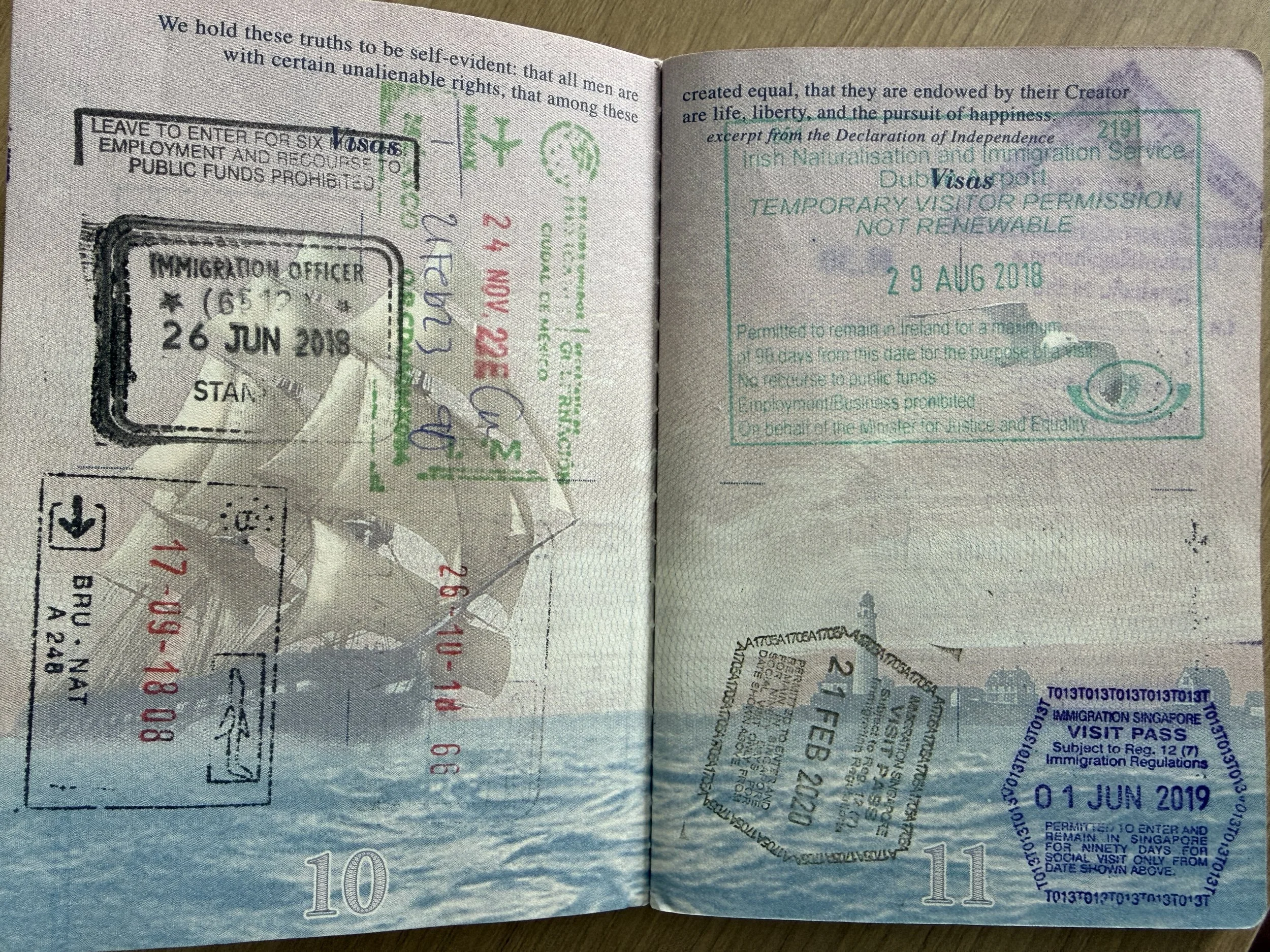
Our UK and Ireland entry stamps, both marked "employment prohibited." Every legal move abroad answers one question: what gives you the right to be there?
Every legal move abroad answers one question: what gives you the right to be there, and for how long? A visa answers it for months or a few years. Residency answers it for good. Citizenship ends the question entirely.
This is general information and our own experience, not immigration or legal advice. Rules change often and vary by person. Check the official government site for the country, and talk to a licensed immigration adviser before you make plans.
Why this is confusing
The words don't mean the same thing everywhere. "Visa", "permit", "residence card" and "status" get used in overlapping ways, and every country builds its own system. A digital nomad visa in one country is a "temporary residence permit" in another.
Under the labels, though, nearly every system works the same way. You climb a ladder from visitor to resident to citizen, and each rung asks for a reason: work, family, study, money or time.
Our own path
We've been on most of the rungs. From 2018 to 2023 we slow-traveled through dozens of countries, usually staying one to three months in each place. Then we chose New Zealand. A job offer from an employer accredited to hire from overseas got Bradley a work visa, and that work visa led to residence for all four of us. We're now working toward New Zealand citizenship.
That path took years, paperwork, and a lot of reading official websites. This guide is the map we wish we'd had at the start.
The ladder: visitor, visa, residence, citizen
Most countries work this way. The details, like how many years and which tests, differ a lot.
1. Visitor
This is how most Americans travel: visa-free, or with a quick online authorization. It usually allows tourism and short business visits, typically up to 90 days at a time. It usually doesn't allow working for local employers or clients. In Europe's Schengen area, the 90 days is shared across most of the region within any 180 days, which catches many slow travelers out.
Working remotely for a US employer on a visitor entry is a gray area in most countries, because their rules don't say either way. A few, including New Zealand, Canada and the UK, now say plainly that it's allowed, within limits. Others point remote workers to a digital nomad visa instead. We checked 56 countries in Can You Work Remotely on a Tourist Visa?
2. Temporary visa or residence permit
This is the first real step. You get permission to stay for a set time, usually one to a few years, for one reason: a job, a remote income, study, a partner, or retirement income. Lose the reason, and you usually lose the visa.
3. Permanent residence
Permanent residence means you can live and work there with no end date, even if your job or relationship ends. Most countries require several years on temporary visas first. Some offer a direct route for skilled workers or investors. You usually have to keep living there to keep it.
4. Citizenship
Citizenship gives you a passport and the right to vote. It usually takes more years of residence, plus things like language or civics tests and an oath. The US allows dual citizenship, but not every country does. Some will make you give up your US passport first.
A few people skip the ladder entirely through citizenship by descent: if a parent or grandparent was a citizen of countries such as Ireland or Italy, you may already be eligible. It's worth checking your family tree before anything else.
The main visa types for Americans
Nearly every temporary visa is built on one of eight reasons. Find the one that matches your life, and you've narrowed the whole world down to a short list.
| Type | Built on | Typical length | Who it suits |
|---|---|---|---|
| Digital nomad or remote worker | A remote income from outside the country | 1 to 2 years, sometimes renewable | Remote employees and freelancers |
| Retirement or passive income | Pension, Social Security, investments | 1 year, renewable | Retirees, people with steady unearned income |
| Work visa | A job offer from a local employer | Tied to the job | People with in-demand skills |
| Skilled migrant or points-based | Your skills, age, qualifications and experience | Often leads to permanent residence | Degree holders in shortage fields |
| Working holiday | Your age (usually 18 to 30) | Up to 1 year | Younger travelers |
| Student | Enrollment in a course | Length of the course | Anyone willing to pay tuition |
| Partner or family | A relationship with a citizen or resident | Varies, often leads to residence | Couples and families |
| Investor | A large investment or business | Varies | People with significant capital |
Real examples, with real numbers
To show what these look like in practice, here are three common ones. These figures were checked in November 2026 and change regularly, so confirm them on the official site before you apply.
| Visa | Income or savings needed | Length | Source |
|---|---|---|---|
| Portugal D8 (digital nomad) | €3,680 a month, four times Portugal's minimum wage | Temporary stay or residence | Remote Work Europe, March 2026 |
| Costa Rica digital nomad | $3,000 a month alone, $4,000 with family; $50,000 health cover | 1 year, plus one 1-year renewal | Taxes for Expats, June 2026 |
| Mexico temporary resident (economic solvency) | $4,049 a month for the last 6 months, or a $68,241 balance for the last 12 months | More than 180 days, up to 4 years (Consulate of Mexico in Houston) | Consulate of Mexico in San Diego, 2026 |
Checked November 2026. Thresholds change; confirm on the official site before you apply.
Two things to notice. First, the bar is usually a couple of thousand dollars a month or more, so you need the income before you go. Second, Mexico's figures differ by consulate. Always use the consulate that will handle your application.
Working holiday visas
Only a few countries offer these to Americans, and most stop at age 30. We cover the list, with official links, in Overseas Jobs for Americans.
Skilled migrant visas
This is the family of routes we used in New Zealand: a skilled job first, then residence. Countries like New Zealand, Australia and Canada run points or skills-based systems. If your occupation is on a shortage list, this can be the fastest road to permanent residence, but it's paperwork-heavy and every detail counts. Our New Zealand guides cover our path, with links to Immigration New Zealand, and for anything that applies to your own case, a licensed adviser is worth every cent.
Retirement and benefit-based visas
If your income is a pension, Social Security, VA disability or investments, many countries have a route designed for you. We cover these in a separate guide: Moving Abroad on Benefits or a Pension.

Medellín, Colombia, April 2022. Start with what you have: income, age, degree and family.
How to choose your route
Start with what you already have, not with the country you dream about. Your route is usually decided by four things: your income, your age, your degree, and how long you want to stay.
Answer these in order:
Do you have a parent or grandparent from another country? Check citizenship by descent first. It can skip the whole ladder.
Do you have income that doesn't depend on where you live? A remote job, a business, a pension or investments opens digital nomad and retirement visas. Note the monthly figure. It decides which countries you qualify for.
Are you 30 or under? A working holiday visa may be the easiest year abroad you'll ever get.
Do you have a degree, or a trade, that's in demand? Skilled visas become possible, and they're often the best path to permanent residence.
Are you married to, or partnered with, a citizen of another country? Partner visas are usually the most direct route there.
None of the above? Look at bridge jobs that sponsor visas, like teaching English, or study. Then build remote income so you have more options next time.
Match the route to your goal
| Your goal | Routes to look at first |
|---|---|
| Try living abroad for a year | Working holiday, digital nomad visa, a teaching contract |
| Slow travel through many countries | Visitor stays, carefully counted, plus digital nomad visas where you settle longer |
| Retire abroad | Retirement or passive income visas |
| Settle somewhere for good | Skilled migrant, partner, or a temporary visa that leads to residence |
| A second passport | Citizenship by descent, or residence that leads to citizenship |
One trap to watch: many digital nomad visas don't lead to permanent residence. If settling for good is the goal, check whether time on that visa counts toward it before you choose.
Our own choice
While we were slow-traveling, we didn't need residency anywhere. When we wanted a permanent home, that changed everything. We needed a route that led to permanent residence in a country we wanted to stay in for good. For us, that was a work visa in New Zealand that led to residence.
If you'd like the steps laid out for your situation, our FastLane Abroad guides cover the whole move, without a degree or with a high-demand degree.

Eastbourne, Lower Hutt. Residency changes your taxes, healthcare and banking, not just your visa.
What residency changes
A visa decides whether you can stay. Residency also changes your taxes, your healthcare and your banking, sometimes before you notice.
Taxes: two countries, not one
The US taxes its citizens on worldwide income, wherever they live. Moving abroad doesn't end your US filing. Tools like the Foreign Earned Income Exclusion and foreign tax credits can stop you being taxed twice, and many people living abroad also have to report foreign bank accounts each year.
Your new country may tax you too. Many countries treat you as a tax resident after about 183 days in a year, but the rules vary, and some count where your home and family are. Getting a visa and becoming a tax resident are separate questions. An accountant who works with Americans abroad is worth paying for the first year.
Healthcare
In many countries, residents can use the public health system, while visitors and some temporary visa holders can't. Until you qualify, you need private or international health insurance, and many visas require it as a condition. Check what your visa gives you access to, not what citizens get.
Banking
Some foreign banks are reluctant to open accounts for Americans, because of the extra US reporting rules they have to follow. Keep at least one US account and card working, and expect opening a local account to take longer than you think.
Keeping your US ties
Passport. Renew early. It's your lifeline, and renewing from abroad takes longer.
A US address. Some banks and brokers need one. Think about this before you sell your home.
Voting. US citizens abroad can still vote in federal elections. The Federal Voting Assistance Program explains how.
Benefits. If you receive Social Security or VA benefits, check how they're paid abroad before you move. Our guide on Moving Abroad on Benefits or a Pension covers this.
We're not tax or legal professionals. Get advice for your own situation.
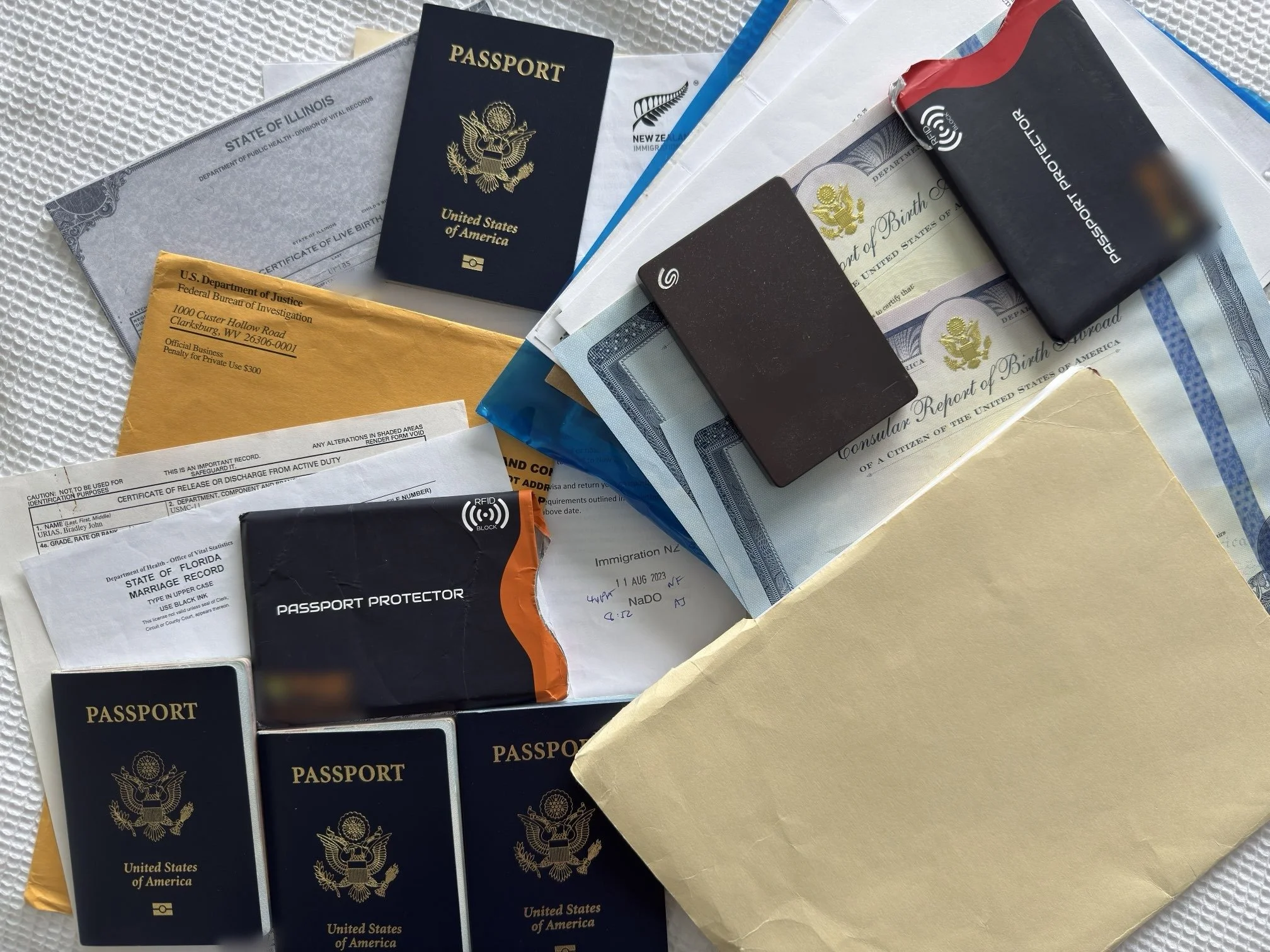
The paper trail behind our New Zealand visas, from FBI checks to the kids' Consular Reports of Birth Abroad. Order documents early. From abroad, they can take weeks.
Mistakes to avoid
Most visa trouble comes from small things done in the wrong order. These are the ones that trip people up most.
Trusting a blog over the government. Including this one. Use guides like ours to understand the options, then read the official immigration site for the details. It's the only source that counts.
Losing count of visitor days. Overstaying, even by a day, can mean fines or a ban. Schengen's shared 90-in-180 rule catches people out. Keep a log of every entry and exit.
Working on the wrong visa. Taking local work, or sometimes even remote work, on a visitor entry can cost you future visas. Make sure your visa covers how you earn.
Choosing a dead-end visa. If you want to stay for good, check that your visa can lead to permanent residence.
Missing documents. Many applications need apostilled records, like birth or marriage certificates and FBI background checks, which can take weeks from the US. Order them early.
Selling everything first. Get the visa approved before you sell the house or quit the job.
Ignoring the tax side. A visa says nothing about taxes. Plan both together.
When to pay a licensed adviser
For a simple visitor stay or a straightforward digital nomad visa, many people manage on their own using the official site. Pay for professional help when:
your case has anything unusual: a past refusal, a criminal record, a health condition, or a gap in your documents
you're applying for residence, a skilled visa or a partner visa, where a mistake can cost months
the stakes are high, like your family's whole move riding on one application
Make sure the adviser is licensed where they practice. Many countries regulate who can give immigration advice. In New Zealand, for example, advisers must be licensed by the Immigration Advisers Authority, unless they're a New Zealand lawyer or otherwise exempt. Be wary of anyone who promises a result or asks you to bend the truth on a form.
Visas and residency: FAQ
What's the difference between a visa and residency? A visa gives you permission to enter or stay for a set time and reason. Residency, especially permanent residence, gives you the right to live there long term. In some countries, a long-stay visa is itself called temporary residence.
Can Americans live abroad without a visa? Only for short stays, usually up to 90 days at a time as a visitor, depending on the country. To live somewhere, you need a visa or residence permit.
Can I work remotely on a tourist visa? It depends on the country. A few allow it, most don't say either way, and some point you to a digital nomad visa instead, which removes the doubt. Our country-by-country guide, Can You Work Remotely on a Tourist Visa?, has the details.
What's the easiest way for an American to get residency abroad? There's no single answer. It depends on your income, age, skills and family. Citizenship by descent, partner visas, and retirement or digital nomad visas are often the most direct, if you qualify.
Do I lose my US citizenship if I become a resident or citizen somewhere else? The US allows dual citizenship, so becoming a resident or citizen elsewhere doesn't by itself end it. Some other countries require you to give up your previous citizenship, so check before you apply.
How long does it take to get permanent residence? Anywhere from a few months on a direct skilled or investor route to five years or more of temporary visas first. Check the specific country.
Where to go next
Build the income first. Most visas need it. Take our free remote work quiz, or see Overseas Jobs for Americans for jobs that come with a visa.
Compare countries. Our best countries for Americans to move to and easiest visas for Americans guides narrow the list.
Run the numbers. The geoarbitrage calculator shows what your income buys in each place.
Read about New Zealand. Our New Zealand page covers our own move. Move to New Zealand from the USA goes deeper.
This page shares general information and our own experience. It isn't immigration, legal or tax advice, and it can't account for your circumstances. Immigration rules change often. Always check the official government website for the country, and speak to a licensed immigration adviser or lawyer before making decisions. Figures were checked in November 2026.