
Moving to New Zealand from the USA: Our Story and What to Know

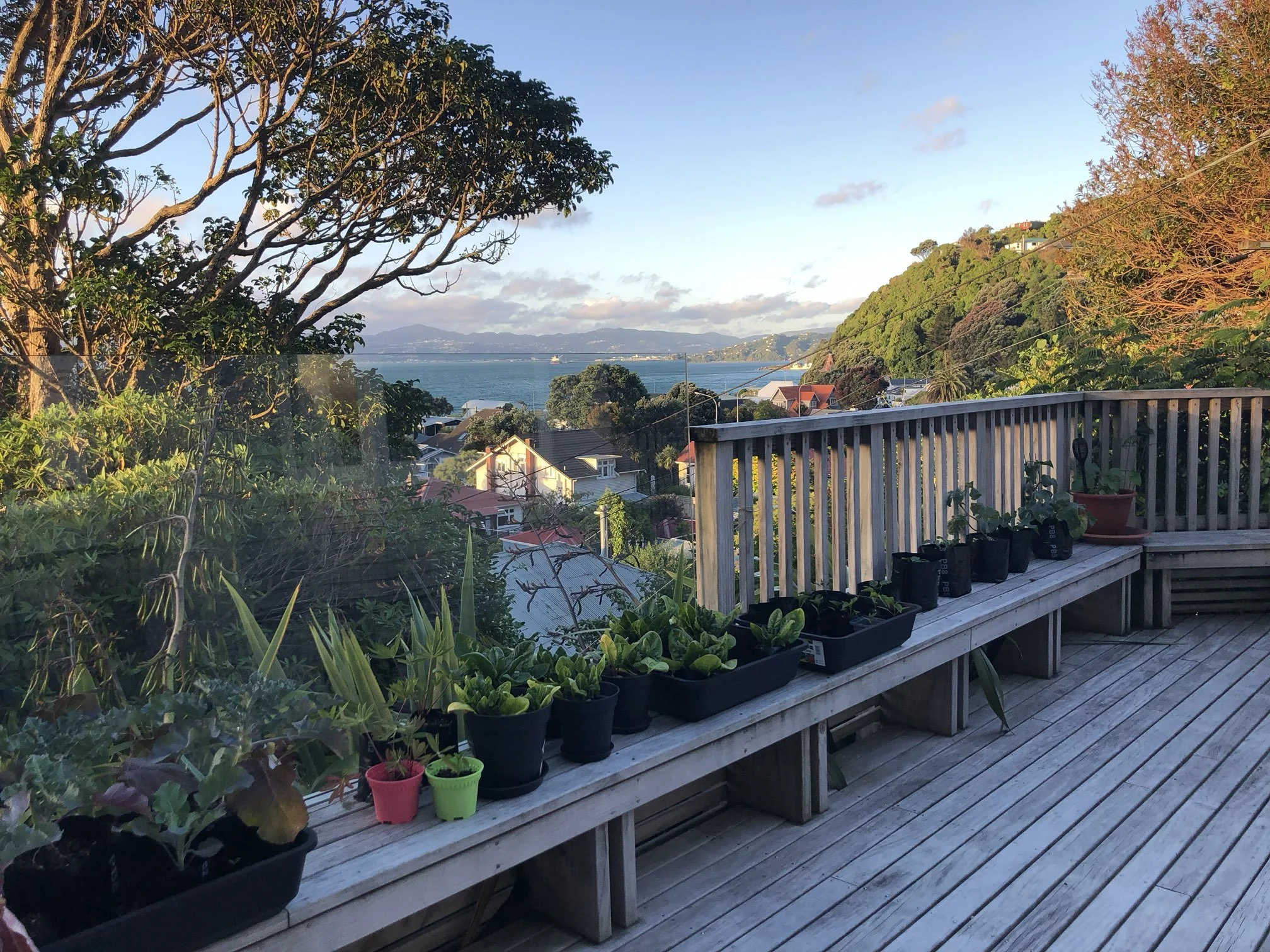
Sunset from our deck in Eastbourne, across Wellington Harbor.
We're two Americans who moved to New Zealand and stayed. We now live here as Permanent Residents with our two kids, and we're working toward citizenship. This is how it went for us, what it cost, and where to find the official rules for yourself.
Please read this first. This is our experience and general information, not immigration advice. In New Zealand, only a licensed immigration adviser or a lawyer may advise you on which visa fits your situation, even for free. For the current rules, go to Immigration New Zealand. For advice about your own case, see a licensed adviser on the Immigration Advisers Authority register.
Why New Zealand
We left the US in early 2018. We had decent jobs, but we couldn't get time off to travel together, and we didn't feel safe or stable there. For five years we slow-traveled, living in a new country every one to three months.
Somewhere along the way, we started looking for a place to stop. We wanted somewhere peaceful and stable, where Nature is close, people look after each other, and one hospital bill can't wipe a family out. New Zealand kept coming out on top.
What this guide covers
the main routes Immigration New Zealand lists for people moving here, with links to each official page
the route we took, as our own story
what it actually cost us to move and settle
what daily life is like: housing, healthcare, driving, school and belonging
What it won't do is tell you which visa fits you. That's not us being cagey. It's the law here, and a licensed adviser will give you a far better answer than a blog can.
The main routes, as Immigration New Zealand describes them
Immigration New Zealand (INZ) publishes every visa, its requirements and its fees on immigration.govt.nz. Below is a plain overview of the main routes people use, with what INZ, or advisers citing INZ, said when we checked in November 2026. Rules change often. Whether any of these fits you is a question for INZ or a licensed adviser.
| Route | What it's for | What we found when we checked | Source |
|---|---|---|---|
| Visitor (NZeTA or visitor visa) | Holidays and short stays | Visitor visas applied for on or after 27 January 2025 allow remote work for employers or clients outside New Zealand, with no limit on the amount. Work for a New Zealand employer isn't allowed. | INZ: Working remotely on a visitor visa |
| USA Working Holiday Visa | A working holiday for young Americans | For people aged 18 to 30. Up to 12 months, with at least NZ$4,200 in funds and full medical insurance. | INZ: USA Working Holiday Visa |
| Accredited Employer Work Visa (AEWV) | A job offer from an employer accredited to hire from overseas | Since March 2025, pay is set by the market rate for the job, not a blanket median-wage floor. | INZ news: AEWV and median wage changes; New Zealand Shores, August 2026 |
| Green List | Roles New Zealand is short of | Some roles lead straight to residence, others to residence after working here for a time. The list and its pay thresholds are on INZ's site. | immigration.govt.nz, search “Green List” |
| Skilled Migrant Category | Residence for skilled workers | Changes from August 2026 added a Skilled Work Experience pathway and a Trades and Technician pathway. The median wage used for many thresholds became NZ$35.00 an hour from 9 March 2026. | Fragomen, August 2026; New Zealand Shores, August 2026 |
| Partner, student, parent and investor visas | Family, study and investment | Each has its own requirements on INZ's site. | immigration.govt.nz |
Checked November 2026. Not immigration advice; rules change often.
A few things stood out to us while reading INZ's pages over the years:
The rules move. The Skilled Migrant Category alone changed in 2023 and again in 2026 while we lived here. Date-check anything you read, including this page.
Wage thresholds matter a lot. Many residence routes are tied to the median wage, which INZ updates.
Employer accreditation is a real filter. For the AEWV, the employer has to be accredited, so not every job offer can lead to a visa.
For the work visa side in more depth, see our New Zealand Work Visa Guide.

May 2023: the visa came through, and we celebrated on the deck.
How we did it
We came to New Zealand one way. Bradley was offered a job by a company accredited to hire from overseas. The job got him a work visa, and the work visa led to residence for all four of us. It was one way in, and it isn't the only one.
The job search
The hardest part wasn't the paperwork. It was the job. Some of the roles Bradley was put forward for paid less than we thought a family of four could live on in Auckland, and by the end of one long month he was close to taking one anyway. Then the right offer came.
What the numbers looked like in 2023
These are 2023 figures, kept here because they're part of our story. Today's are different. Check INZ for the current rules.
For most jobs, the work visa's pay floor was then the median wage: NZ$29.66 an hour from February 27, 2023, or about NZ$61,700 a year full time.
Bradley's offer was about twice what a typical worker in New Zealand earned.
Even so, the rent on our house took 43% of what he brought home. We paid NZ$800 a week.
A family of four on one income is the expensive way to do this. A single person or a couple, or anyone willing to share a house, would spend far less.
From work visa to residence
Our work visa led to residence for the whole family. Becoming Permanent Residents later cost a NZ$315 fee for the Permanent Resident Visa, under INZ's fee table from October 1, 2024. Compared with what it took to get here, that felt like a bargain.
We've told the longer version of this, with the dates, in How We Moved to New Zealand, and the whole story is in our memoir, Two Weeks a Year.
What we'd tell our younger selves
Not which visa to pick. That's not ours to say. But about the experience:
Expect it to take longer than you think, and keep savings for the gap.
Keep every document. Payslips, contracts, letters, certificates. You'll need some of them again.
Read INZ's pages yourself, not just summaries. The details live there.
Talk to a licensed adviser early, before you make decisions you can't undo, like quitting a job or selling a house.
Settling in cost us about US$3,919 a month for two adults, less than our Orlando estimate.
What it costs
New Zealand isn't cheap. After five years of slow travel at about US$2,470 a month for the two of us, settling here was a step up. Our first stretch of settling in averaged about US$3,919 a month for the two of us as adults, with our kids' costs left out, as everywhere on this site. That's still below our estimate of US$4,795 for the same life in Orlando.
Housing is the big one
Our rent: NZ$800 a week for a family house in our first year, and an average of NZ$793 a week over three years.
A room in a shared house: when we checked Trade Me listings in late 2026, rooms ran about NZ$200 to NZ$300 a week per person. Many listings said no couples.
Rent is weekly here, and listings quote weekly prices. Multiply by 52 and divide by 12 to compare with US monthly rent.
Other costs we noticed
Groceries cost more than we were used to in Southeast Asia, and often more than in the US. Shopping at markets and cooking at home makes a big difference.
Cars are expensive to buy, and most of New Zealand is hard to live in without one outside the bigger cities.
Power and heating matter more than Americans expect. Many older houses are cold and damp in winter.
Fuel is imported, so prices swing with world events.
Before you land
Budget for flights, visa fees, medical checks if required, shipping or replacing household goods, a rental bond (up to four weeks' rent), and enough to live on until the first paycheck. Keep a cushion for the job search, too. Ours took longer than we planned.
When we first traveled through New Zealand as visitors, years before we moved here, we wrote about living in New Zealand on less than $44 a day. That was travel, not settling. The numbers above are the real cost of staying.
For the money side of a move like this, our geoarbitrage guide explains how years of low costs abroad made the move to a pricier, more stable home possible.

Butterfly Creek, Eastbourne. Nature is never far away here.
Life in New Zealand
The visa gets you here. These are the things that decided how it felt to actually live here.
Healthcare
This was a big part of why we came. Most people with resident visas who live in New Zealand can get publicly funded health care, according to INZ. Eligibility on a work visa depends on the visa and its length, so check INZ's health pages for your own case.
Everyone in New Zealand, visitors included, is covered by ACC, the public accident compensation scheme, for injuries from accidents. Many families also buy private health insurance for faster access to non-urgent care. We did. Jenny's employer covers her, and we pay about NZ$139 every two weeks to add the rest of the family. That's roughly NZ$300 a month, or about US$165 at late-2026 exchange rates of around 55 US cents to the New Zealand dollar.
One thing to know: you enroll with a GP (family doctor) practice, and some practices have waiting lists. Enroll as soon as you have an address.
Driving
New Zealanders drive on the left. A valid US licence can usually be used for a limited time after you arrive, after which you'll need to convert it to a New Zealand licence. Check the current rules with Waka Kotahi, the NZ Transport Agency. Roads outside the cities are often narrow, winding, and slower than the map suggests.
Schools
Many state schools are organized by zones, so where you rent decides which local state school your kids can attend. Whether school is free for your children depends on your visa, so check with the Ministry of Education or the school before you choose a house.
Culture and belonging
New Zealand is a bicultural country, built on Te Tiriti o Waitangi, the Treaty of Waitangi, between Māori and the Crown. Te reo Māori is an official language, and you'll hear it every day: in greetings, place names, schools and the news.
Learning some te reo and tikanga, the Māori customs and ways of doing things, is one of the best things we've done here. It's basic respect, and it opens doors. Start with greetings and pronouncing place names properly.
The things we love most are simple. Nature is never far away, from the bush to the beach. People are generous with their time. And there's a quieter pace that took us a while to settle into.
What surprised us
Houses are colder than American ones. Heating and insulation matter.
Things close early, especially outside the cities.
People are modest. Self-promotion that's normal in the US can land badly here.
It's far from everywhere. Flights home are long and expensive, so plan visits carefully.
For our favorite places to eat, explore and wander, see our New Zealand page.

Arriving in Auckland. Get the visa approved before you sell the house or quit the job.
From first research to landing
This is the order things happened in for us, and the order we'd follow again. It's a checklist for getting organized, not advice on which visa to choose.
Visit first, if you can. A few weeks as a visitor tells you more than any article. Try the region you'd live in, in winter as well as summer.
Read Immigration New Zealand's pages. Start at immigration.govt.nz and read the visas that interest you in full, including the requirements, fees and processing times.
Get licensed advice for your own situation. A licensed adviser can tell you which routes are realistic for you. Check any adviser on the IAA register.
Line up the income. Whatever route you're looking at, know how you'll pay for life here. For us it was a job offer, and job hunting from abroad took months.
Gather documents early. Birth and marriage certificates, police certificates such as an FBI check, qualifications, and work references can take weeks to get from the US.
Apply, and wait. Don't sell the house or quit your job until a visa is approved.
Plan the landing. Short-term housing for the first weeks, a bank account, an IRD number for tax, GP enrollment, and a car if you'll need one.
Handle the US side. Your US tax filing continues, and so do your US accounts, address and mail. Our guide to Visas and Residency, Explained covers what living abroad changes.
Settle in. Learn the local greetings, join something, and give it a year before deciding how it's going. The first months are the hardest.
Moving to New Zealand: FAQ
Can Americans move to New Zealand? Yes. Americans move here through work, study, partner, working holiday and residence visas, among others. Immigration New Zealand lists them all, with their requirements, at immigration.govt.nz.
Can I work remotely for a US company while visiting New Zealand? INZ says visitor visas applied for on or after 27 January 2025 allow remote work for employers or clients outside New Zealand. Check INZ's remote work page for the conditions, and Inland Revenue for the tax side.
Which visa should I apply for? We can't tell you, and in New Zealand nobody without a licence legally can. A licensed immigration adviser can.
How long did it take you? From job offer to a work visa, then on to residence, it took us a long time, with plenty of waiting and paperwork. Processing times change, and INZ publishes current ones on its site.
Is New Zealand expensive? More than most places we lived while traveling, and less than our estimate for the same life in Orlando. Housing is the biggest cost. See "What it costs" above.
Can I keep my US citizenship? The US allows dual citizenship, and so does New Zealand. If you become a New Zealand citizen one day, you don't have to give up your US passport.
Getting advice for your own situation
For anything about your own case, these are the places to go:
Immigration New Zealand: the official rules, fees and forms.
The Immigration Advisers Authority register: to find, or check, any licensed adviser.
New Zealand Shores: the licensed advisers we refer people to. Their team includes Fabien Maisonneuve, a licensed immigration adviser (IAA licence 201701247), based in Hamilton. Contact them directly, or email us at info@eatwanderexplore.com and we'll introduce you.
New Zealand Shores is a referral partner. Under our agreement, if someone we introduce becomes their client, we may receive a referral fee, at no extra cost to you. So far, none has, and we've never been paid. We don't give immigration advice, and New Zealand Shores' advice is their own.
Keep reading
Our New Zealand hub: food, places and life here
Two Weeks a Year, our memoir of the whole journey
This page shares our own experience and general information from public sources. It isn't immigration advice. Under New Zealand's Immigration Advisers Licensing Act 2007, only licensed immigration advisers and lawyers may give immigration advice. For your situation, contact Immigration New Zealand or a licensed adviser. Visa rules change often. Facts on this page were checked in November 2026.