
Leave the USA: Countries That Let You Move Abroad on Retirement Income, SSDI, VA, or Investments

Antalya, Turkey, June 2021. A check that arrives every month is half of moving abroad solved.
If you have income that arrives every month no matter where you live, you already have the hardest part of moving abroad solved. Social Security, SSDI, VA disability and most pensions can follow you overseas. Many countries run visas built around exactly that kind of income.
The catch: not every benefit travels, a few countries are off-limits, and healthcare is the piece most people get wrong. This guide covers all three, then shows what a fixed income actually buys abroad, using what we really spent.
This is general information and our own experience, not benefits, tax, legal or immigration advice. Benefit and visa rules change. Confirm everything with the Social Security Administration, the VA, and the official immigration site for the country, and speak to a licensed adviser about your own situation.
Who this is for
Retirees on Social Security, a pension, or 401(k) and IRA withdrawals
People on SSDI who want their benefit to go further
Veterans with VA disability compensation or a military pension
Anyone with passive income from investments or rentals
Bradley is a Marine Corps veteran, and we've spent years living on tight budgets abroad. We know how far a fixed check can stretch when the cost of living is half what it is at home. Over five years, the two of us averaged about $2,470 a month abroad. Our estimate for the same life in Orlando was about $4,795.
The short version
| Income | Usually follows you abroad? |
|---|---|
| Social Security retirement | Yes, in most countries |
| SSDI | Yes, in most countries, with reporting rules |
| SSI | Generally no. It stops after about a month outside the US |
| VA disability compensation | Generally yes |
| Military and private pensions | Usually yes, depending on the plan |
| 401(k), IRA, investments | Yes, though some US brokers restrict accounts for non-residents |
The details, and the exceptions, are next.
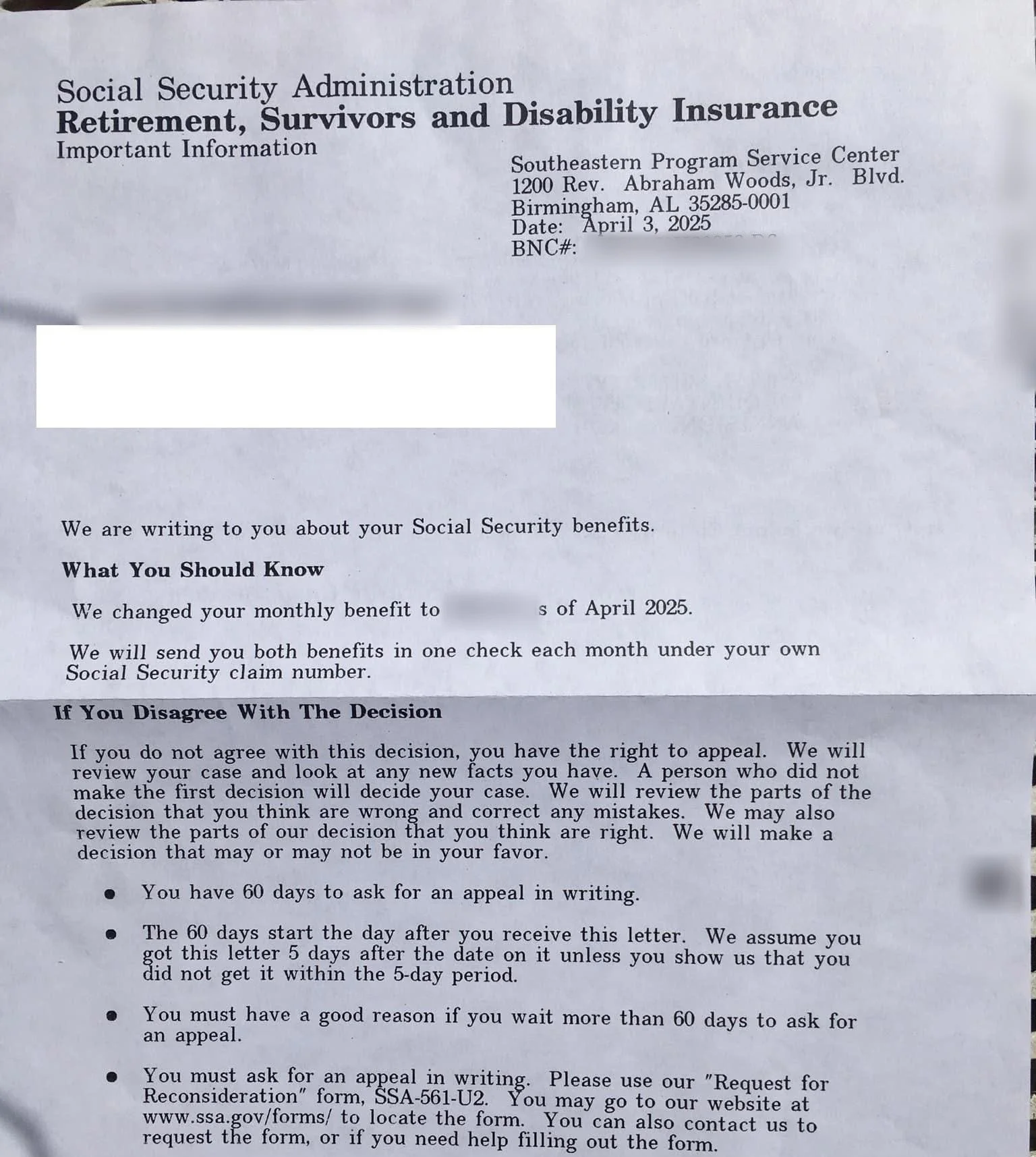
A real SSA letter from April 2025, details blurred. SSA mails questionnaires abroad. Miss one, and payments can stop.
Will my benefits follow me?
For US citizens, Social Security retirement and SSDI generally keep paying wherever you live, with a short list of exceptions. SSI is the big one that doesn't travel. These rules come from SSA's own guide, Your Payments While You Are Outside the United States (April 2026 edition).
Social Security retirement and SSDI
If you're a US citizen and eligible, SSA can keep paying you while you live abroad. Payments can go to a US bank account, or to a foreign bank in countries that have an international direct deposit agreement with the US.
There are exceptions:
Cuba and North Korea. US Treasury rules stop payments to people living there. Citizens can receive the withheld payments later, after moving somewhere SSA can pay.
Azerbaijan, Belarus, Kazakhstan, Kyrgyzstan, Tajikistan, Turkmenistan and Uzbekistan. Payments are restricted. Some people can qualify under special conditions, so contact SSA first.
Other sanctions can affect other countries. Check before you move anywhere unusual.
Keep your payments flowing
SSA mails questionnaires to many people living abroad, usually between May and June, every year or every two years depending on your benefit. If you don't send it back, your payments stop.
You also have to report changes, including:
a new address
work outside the US, if you're under full retirement age
for SSDI, any improvement in your condition or return to work
marriage, divorce, or a death in the family
a foreign pension from work that wasn't covered by Social Security
US embassies have Federal Benefits Units that handle Social Security questions for people living in that region. Find yours before you need it.
SSI: the one that stops
Supplemental Security Income is a needs-based program, and it generally stops if you're outside the US for a full calendar month or 30 days in a row. If SSI is your main income, moving abroad usually isn't possible without another income source. Ask SSA how your exact situation is treated before you plan anything.
VA disability compensation and pensions
VA disability compensation can generally be paid to veterans living abroad, including by direct deposit to foreign banks in many countries. Contact the VA before you move to set up payments and confirm the rules for your destination. Military retirement pay and most private pensions also pay abroad, but check with your plan administrator.
401(k), IRA and brokerage accounts
Your money stays yours. But some US brokers restrict or close accounts once you have a foreign address, and some funds can't be bought by non-US residents. Ask your broker before you move, not after.

Arrowtown, New Zealand, April 2024. Your check may follow you abroad, but Medicare mostly won't.
Healthcare: the part most people get wrong
Your check may follow you abroad, but your US health coverage mostly won't. Plan healthcare before you choose a country, not after.
Medicare
Medicare generally doesn't pay for care outside the US, apart from a few narrow exceptions. Many retirees abroad buy local or international insurance and pay for care directly.
The hard decision is whether to keep paying for Medicare Part B. If you drop it and later move back, you can face a lifelong late-enrollment penalty. Many people keep it as insurance against coming home. Check the current rules on Medicare.gov before you decide.
VA health care abroad: the Foreign Medical Program
The VA's Foreign Medical Program can pay for care abroad, but only for:
a VA-rated, service-connected disability
a condition that makes a service-connected disability worse
care that's part of the Veteran Readiness and Employment program
You can use any licensed provider in the country where you live or travel. Everything else, like a broken arm or a routine checkup, needs other insurance. Register with the Foreign Medical Program before you go.
Your options abroad
International health insurance. It covers you in many countries, often including evacuation. Read what it excludes, especially pre-existing conditions and age limits.
Local private insurance. It's often much cheaper than US plans, but it may only cover one country.
The public system. In some countries, legal residents can join the public health system. In others, they must. Visitors usually can't.
Many retirement visas require proof of health insurance, so you'll need a plan in place to apply anyway.
Prescriptions
Check whether your medications are available, and legal, in your new country. Some common US prescriptions are controlled or unavailable elsewhere. Bring a supply, your prescriptions, and a letter from your doctor for the first months.

La Fortuna, Costa Rica, May 2022. Panama and Costa Rica's pensionado visas start at about $1,000 a month.
Countries with visas built for retirement income
Retirement visas come in two kinds, and which one you need depends on your income.
Pension visas (often called pensionado) ask for a lifetime pension, like Social Security or a military or company pension. The bar is often lower, but the income has to be guaranteed for life.
Passive or independent income visas accept a wider mix: pensions, investments, rental income, sometimes savings. The bar is usually higher.
Four with current figures
These were checked in November 2026. Thresholds change, and some are set by each consulate, so confirm with the official source before you apply.
| Country and visa | Income needed | Notes | Source |
|---|---|---|---|
| Panama, Pensionado | $1,000 a month in lifetime pension income | $750 if you own Panamanian property worth over $100,000; $250 more per dependent | Panama's National Migration Service, Jubilado/Pensionado requirements (official) |
| Costa Rica, Pensionado | $1,000 a month from a government or private pension | Residents generally join the public health system | Unofficial and unverified: Rio Times, August 2026. We couldn't find this figure on an official Costa Rican government page. Confirm with the consulate. |
| Mexico, Temporary Resident | $4,049 a month for the last 6 months, or a $68,241 balance for the last 12 months | Pension income counts. Figures differ by consulate | Consulate of Mexico in San Diego, 2026 |
| Portugal, D7 (passive income) | Tied to Portugal's minimum wage, €920 a month in 2026, with more for each family member | Inside Schengen. Leads to residence over time | Remote Work Europe, March 2026, for the 2026 minimum wage |
Notice the spread. Panama and Costa Rica ask for about $1,000 a month in pension income. Mexico's temporary residence asks for about four times that, from that consulate at least.
Does Social Security, SSDI or VA count?
Social Security retirement is the classic example of a lifetime pension, and it's what many retirees use for pensionado visas. Whether SSDI or VA disability compensation counts is less consistent, because some officials treat it differently from a retirement pension. Ask the consulate directly, in writing, and bring an official benefit letter from SSA or the VA showing your monthly amount.
Others worth researching
Ecuador, Colombia, Uruguay, the Philippines, Thailand and Malaysia all have retirement or long-stay programs that Americans use. Their thresholds and rules have changed recently, so we're not quoting figures we couldn't confirm. Start with each country's official immigration or consulate site.
For the full picture of how visas, residency and citizenship fit together, see our guide to Visas and Residency, Explained.
Making the numbers work
A visa threshold tells you whether you qualify. It doesn't tell you whether you can live well. For that, compare your monthly income with what life actually costs where you're going.
Here's what the two of us really spent, as adults, in each country we lived in.
These are slow-travel costs from 2018 to 2023, not retirement budgets. Settling down long term usually means higher rent but fewer flights. Prices have risen since, and you'll also need health insurance, so add a margin of 20% or more.
A worked example
Say a couple's combined Social Security is $3,000 a month.
In Orlando, at our estimated $4,795 a month, they'd be about $1,800 short every month.
In Mexico, at about $1,514 a month, they'd have nearly half their income left over. But they'd still fall short of the $4,049 that the San Diego consulate wants for temporary residence.
In Costa Rica, at about $2,392 a month, they'd clear the $1,000 pensionado bar easily and have about $600 a month spare for insurance and surprises.
The lesson: the cheapest country to live in isn't always the easiest to qualify for. Check both numbers.
Run your own
Our geoarbitrage calculator compares staying home with living abroad on these same country budgets. For a breakdown of where the money went, see What It Really Costs to Live Abroad.
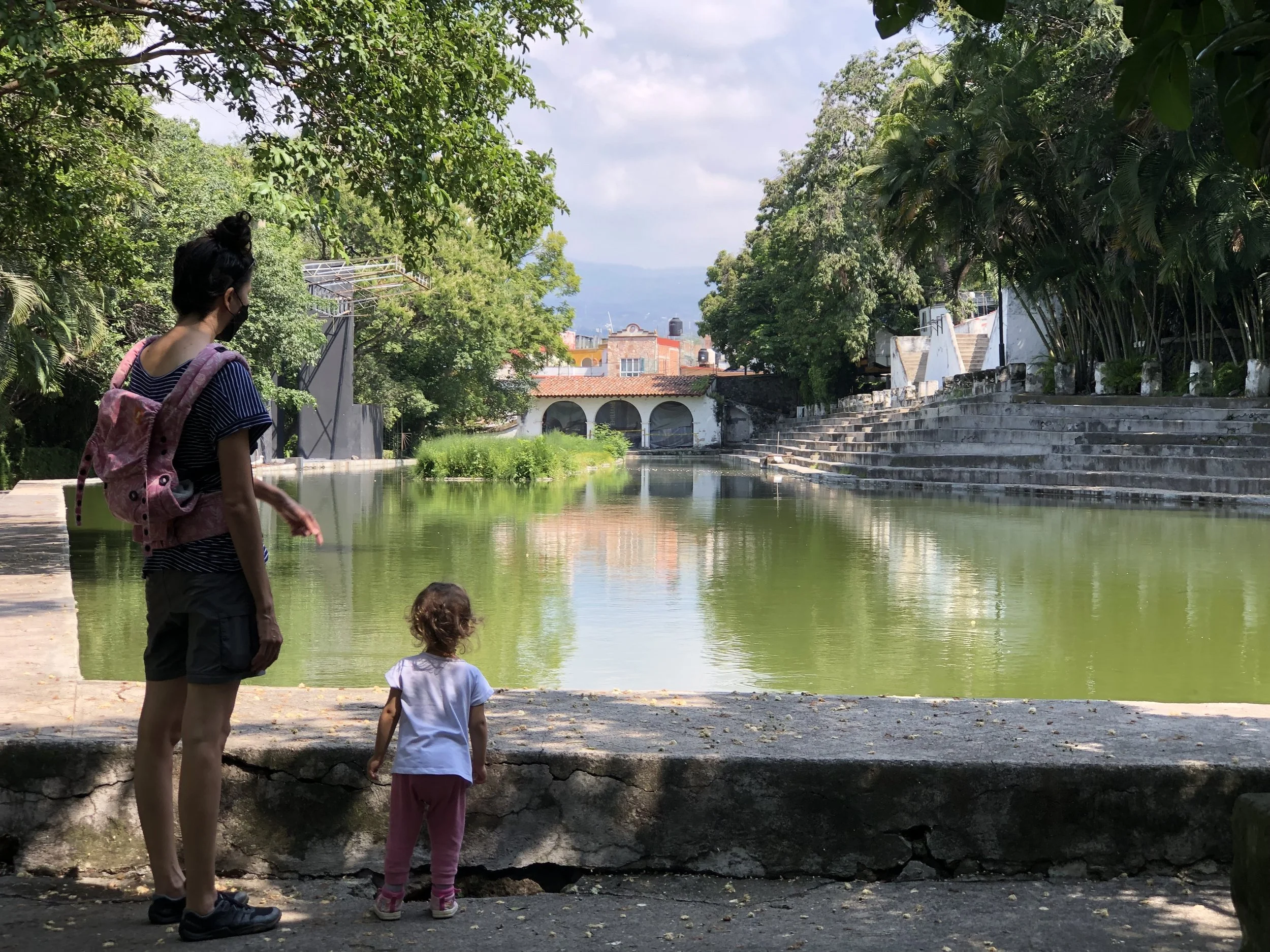
Cuernavaca, Mexico, September 2022. Live there for a month or two before you commit.
Practical steps before you go
When your income depends on a government payment, the paperwork matters as much as the visa. Here's the order we'd do it in.
1. Scout before you commit
Visit first, as a regular tourist, for a month or two in the place you're considering. Live like a resident: rent an apartment, shop at the market, find a doctor and a pharmacy. Don't plan to live on back-to-back tourist stays. Border runs can be refused, and an unstable address is a real problem when your benefits depend on reporting where you live.
2. Get your benefit letters
Most retirement visas ask for an official letter showing your monthly income. Request a benefit verification letter from SSA, and a benefit summary letter from the VA if that applies to you. Consulates often want them recent, translated and apostilled, so check their rules.
3. Gather documents early
Birth and marriage certificates, an FBI background check, and apostilles can take weeks or months from abroad. Order them while you still have a US address.
4. Set up banking that keeps working
Keep at least one US bank account and card active, with online access.
Ask whether your destination has international direct deposit with SSA. If not, payments go to your US account and you move money across yourself.
Use a card with no foreign transaction fees, and a low-fee service for transfers. We use Wise. That's our referral link: if you sign up through it, we may get a small credit, at no extra cost to you.
Keep a reliable US mailing address or mail service. Banks, the IRS and SSA all still write to you.
5. Understand the tax side
Moving abroad doesn't end US taxes. Social Security and pensions may still be taxable in the US, and the Foreign Earned Income Exclusion doesn't apply to them, because it only covers earned income. Your new country may tax them too, or may not, depending on its laws and any tax treaty with the US. Talk to a tax professional who works with Americans abroad before you move.
6. Update your address everywhere
Tell SSA, the VA, your pension plan, your bank and your broker. Then watch for the SSA questionnaire, usually mailed around May and June. Missing it is one of the easiest ways to have payments stopped.
7. Protect yourself from scams
Retirees abroad are a target. SSA and the VA won't call you demanding payment or gift cards. Never share your Social Security number or bank details with anyone who contacts you first. If in doubt, contact the agency yourself, using the contact details on its official website.
Moving abroad on benefits: FAQ
Can I keep my SSDI if I move abroad? If you're a US citizen, SSDI generally keeps paying in most countries. You still have to report changes, including any work or improvement in your condition, and return SSA's questionnaires. Confirm your situation with SSA before you move.
Can I keep my VA disability compensation abroad? Generally yes. VA health care is more limited: the Foreign Medical Program covers service-connected conditions only. Contact the VA before you move.
What happens to SSI if I leave the US? SSI generally stops if you're outside the US for a full calendar month or 30 days in a row. It isn't designed to support living abroad.
Which countries accept Social Security for a retirement visa? Many pension-based visas, such as Panama's and Costa Rica's pensionado programs, are built around lifetime pensions like Social Security. Mexico's temporary residence accepts pension income, at a higher level. Always confirm with the consulate.
Does Medicare work abroad? Generally no, apart from narrow exceptions. Plan for local or international insurance, and think carefully before dropping Part B.
Can I use a student visa instead? Some people do, especially to learn a language. A student visa is tied to a real course, often limits work, and usually ends when the course does, so it's a bridge rather than a retirement plan.
How long can I stay in Europe without a visa? In the Schengen area, 90 days within any 180, shared across the whole region. For longer, you need a national visa, like Portugal's D7.
Where to go next
Understand the routes. Read Visas and Residency, Explained.
Run your numbers. Our geoarbitrage calculator compares staying home with living abroad on our real country budgets.
Add a little income. A part-time remote skill can turn a tight budget into a comfortable one. Take the free remote work quiz.
Plan the move. Our FastLane Abroad guides walk you through it, without a degree or with a high-demand degree.
Get the full playbook. Travel That Lasts has our real budgets and the worksheets we used.
This page shares general information and our own experience. It isn't benefits, tax, legal or immigration advice, and it can't account for your circumstances. Benefit rules and visa thresholds change. Confirm everything with the Social Security Administration, the VA, Medicare, and the official immigration site or consulate for the country, and speak to a licensed professional before you decide. Figures were checked in November 2026.