Is Bookkeeping a Good Remote Career? What No One Tells You Before You Start
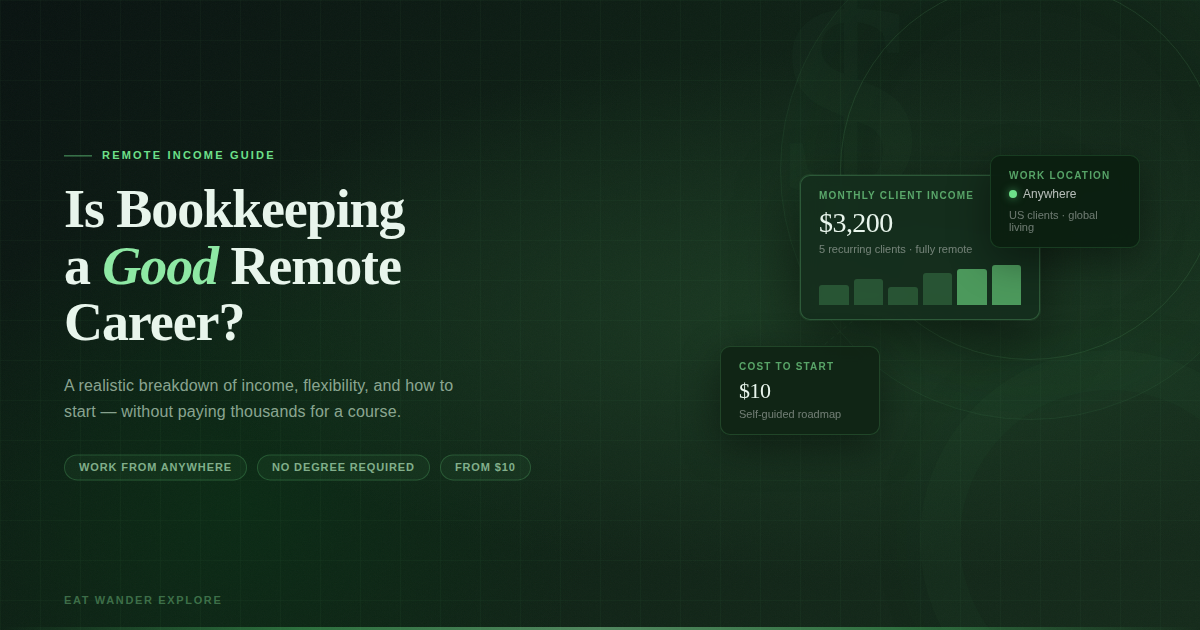
Remote Income > Skill-Based Income Options > Is Bookkeeping a Good Remote Career?
Most people searching for a remote career end up in one of two lanes. The first is tech (coding, data, software development, artificial intelligence) - which is genuinely one of the best paths available, but it takes real time and commitment to get there. The second is content creation (blogging, YouTube, social media) - which sounds accessible but tends to be unpredictable, slow to monetize, and saturated with people chasing the same dream.
Bookkeeping sits in a quieter, less glamorized middle ground. It doesn’t get the same marketing budget as tech bootcamps or the same lifestyle appeal as travel influencers. But for a specific kind of person - those detail-oriented, self-directed, and interested in building a sustainable income they can take anywhere - it’s one of the most genuinely accessible remote careers available right now.
This article is a realistic look at what bookkeeping actually involves as a remote career, what it pays, whether you need a degree or expensive certification, how you’d get started, and who it’s a good fit for - including who should probably skip it. We’ll also talk about the money side of learning it, because the range between what it actually costs to learn bookkeeping and what some programs charge is… significant.
No hype. Just an honest breakdown.

What Does a Bookkeeper Actually Do Day-to-Day?
Before deciding whether bookkeeping is right for you, it helps to understand what the work actually looks like (not the version from an infomercial, but the real day-to-day reality).
A bookkeeper’s job is to keep accurate, organized records of a business’s financial transactions. That means tracking every dollar that comes in and every dollar that goes out. In practical terms, this involves recording sales and expenses, reconciling bank and credit card statements against the books, managing accounts payable (bills the business owes) and accounts receivable (money owed to the business), categorizing transactions correctly, and generating basic financial reports like profit and loss statements and balance sheets.
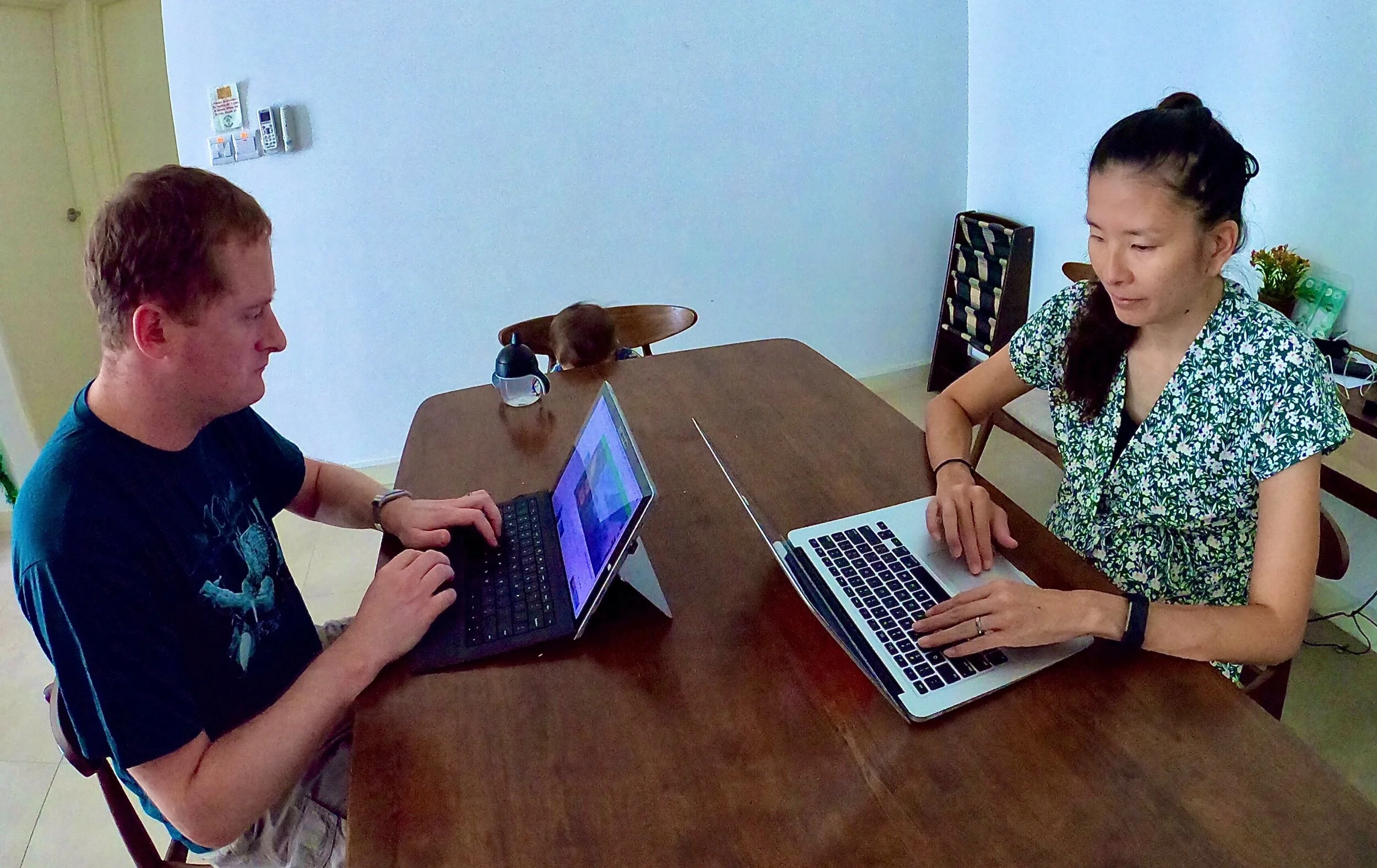
This is exactly what we did for the first 5 years of traveling around the world (we have one of the most extensive logs of expenses of anyone who has done this).
Bookkeepers are not accountants, and that distinction matters. An accountant typically analyzes financial data, provides strategic advice, handles tax preparation (in most cases), and often holds a CPA (Certified Public Accountant) license that requires significant education and examination. A bookkeeper focuses on the transactional layer: making sure the records are accurate, organized, and current so that an accountant or business owner can understand the financial picture. There is overlap, and some experienced bookkeepers do take on limited advisory roles, but the core job is fundamentally about accuracy and organization, not high-level financial strategy.
This is actually good news for career changers. You don’t need years of accounting education to do bookkeeping well. What you need is attention to detail, comfort with numbers at a basic level, organizational discipline, and the ability to learn the software that runs the industry.
That software, primarily, is QuickBooks Online. It’s the dominant platform for small business bookkeeping in the US and is widely used in other English-speaking markets as well. Xero is the other major platform, particularly popular in Australia, New Zealand, and the UK. Wave and FreshBooks exist on the lower end for very small businesses or freelancers. However, as a bookkeeper, QuickBooks Online is the tool you’ll spend most of your working hours inside of (unless you're specifically marketing towards one of the other crowds) as it handles everything from transaction entry and bank feeds to invoicing and financial reporting.
We've recently switched to Xero now that we have moved to New Zealand.
Why Bookkeeping Is One of the Most Remote-Friendly Careers Available
The shift to remote work across many industries over the last decade has been real, but uneven. Some professions claim to be remote-friendly while still requiring regular in-person presence. Bookkeeping is genuinely different.
Cloud accounting software changed the nature of bookkeeping work completely. When QuickBooks Online and Xero became standard tools, the need for a bookkeeper to physically be in a client’s office largely disappeared. Bank feeds connect directly to the software. Receipts get uploaded digitally. Communication happens over email or video call. Financial reports get shared as PDFs or links. There is almost nothing about the actual work of bookkeeping that requires physical proximity to a client.
This isn’t a recent pandemic-era accommodation, it’s how bookkeeping has operated for well over a decade. The infrastructure for working with clients remotely has been standard in this industry long before remote work became a mainstream conversation elsewhere.
What this means practically is that bookkeeping is genuinely location-independent in a way that many “remote” careers are not. You can work with clients based in Texas while living in Portugal. You can serve US-based small businesses from New Zealand, the Philippines, or anywhere with reliable internet. Client communication is almost entirely asynchronous - meaning that most bookkeeping correspondence happens over email, and a typical client may only need a monthly check-in call, if that (what time you do the work doesn't really matter).
The work is also well-suited to freelance or self-employed structures. Most bookkeepers who work independently build a small roster of recurring monthly clients rather than juggling dozens of one-off projects. This creates predictable, recurring income - one of the things that makes bookkeeping appealing compared to other freelance paths where income can be feast-or-famine.
There is also a growing market for remote bookkeeping employment. Working as a staff bookkeeper for an accounting firm, a bookkeeping service company, or a larger business that needs in-house financial record-keeping without wanting to staff a full accounting department. These roles are increasingly advertised as fully remote, particularly with smaller firms and tech-forward businesses.
Finally, the barrier to entry is genuinely low compared to most remote careers that pay comparable rates. You don’t need a four-year degree, an expensive bootcamp, or years of experience before you can start taking on real clients. That doesn’t mean there’s no learning curve - there is a small learning curve - but the path from zero to first client is measurable in months, not years.
What Does a Remote Bookkeeper Actually Earn?
This is where a lot of content around bookkeeping gets either vague or misleading, so let’s be direct about what the realistic income ranges look like.
Remote bookkeeping employees - the people working as staff bookkeepers for a company or firm on a full-time or part-time basis typically earn between $18 and $25 per hour (USD) at the entry level. That works out to roughly $37,000 to $52,000 per year for full-time positions. Experienced bookkeepers, those with several years of experience and potentially specializing in particular industries or software, can earn $55,000 to $75,000 or more in salaried roles. Geographic location affects this less than it does for many careers, since remote employers often pay relative to the role’s scope rather than the employee’s location, though this varies.
Freelance bookkeepers - those who run their own practice and serve clients independently operate on a different model. Hourly rates for freelance bookkeeping typically range from $30 to $80 per hour (USD) depending on experience, specialization, and the complexity of the clients’ books. Most established freelance bookkeepers, however, price their services as flat monthly retainers rather than hourly rates. A small business client might pay $200 to $500 per month for basic bookkeeping, while a more complex client with higher transaction volume, multiple accounts, payroll, or specialized reporting needs might pay $600 to $1,500 per month or more.
A bookkeeper with five to ten solid monthly clients paying an average of $400 per month is generating $2,000 to $4,000 in monthly revenue. That is not extraordinary income by US cost-of-living standards, but it is sustainable, predictable, and genuinely location-independent - which changes its value significantly depending on where you live and what your expenses look like (we’ll discuss where we lived quite well on about $2,500 per month later).
Bookkeeping as a business - building a small firm by bringing on additional bookkeepers and taking on more clients than one person can handle is the scaling path some take. At this level, income potential is much higher, though it also becomes a more complex business operation requiring client management, team coordination, and genuine sales effort.
A few things are worth noting honestly. Bookkeeping income at the entry level is not dramatic. If your goal is to earn $100,000 or more quickly, there are faster paths (particularly in tech). Bookkeeping tends to build steadily. It rewards consistency, good client relationships, and reliable work over time. The income ceiling exists, but it takes years and deliberate business development to reach it.
So it's a great option if you're starting it “on the side” of having other income and building it up until it's where you want it to be at.
As we've mentioned, the income numbers also feel different depending on where you live and what your cost of living is. This matters a lot for people reading this on our site - which is oriented around geoarbitrage and global living, and we’ll come back to it specifically further down in this article.
Do You Need a Degree or Expensive Certification?
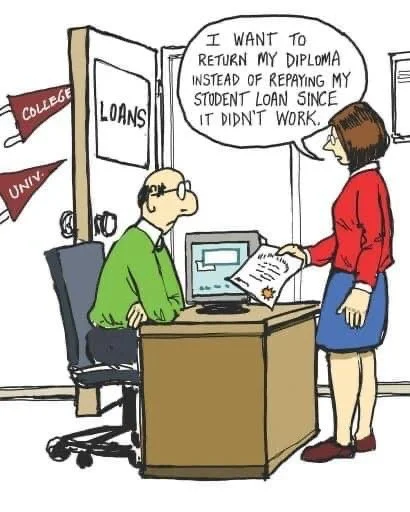
The short answer is no - not to start, and not to build a successful freelance practice.
Bookkeeping, unlike accounting, is not a licensed profession in most jurisdictions. There is no regulatory body that controls who can call themselves a bookkeeper or take on bookkeeping clients, the way law or medicine is regulated. This means the barrier to entry is fundamentally about demonstrating competence and building trust with clients, rather than obtaining formal credentials.
That said, certifications exist and can be genuinely useful, particularly in specific contexts.
QuickBooks ProAdvisor certification is free to obtain through Intuit’s training platform and is probably the most widely recognized credential in the bookkeeping space. It signals to potential clients that you know the software, and it allows you to be listed in Intuit’s Find-a-ProAdvisor directory - though as we covered in our full Booming Bookkeeping Business review, that directory has real limitations, particularly for people starting from outside the US. Obtaining the ProAdvisor certification is a sensible step regardless, since the training itself is valuable and it costs nothing.
AIPB (American Institute of Professional Bookkeepers) Certified Bookkeeper designation requires passing an exam and demonstrating two years of experience. It carries more professional weight than ProAdvisor certification and is recognized by employers and larger clients as a legitimate credential. This is worth pursuing once you have some experience and are looking to position yourself at a higher rate or target more sophisticated clients.
NACPB (National Association of Certified Professional Bookkeepers) License is another option that is recognized particularly in the US market. The NACPB also offers free resources, webinars, and professional development content that is genuinely useful, especially when you’re starting out.
What none of these credentials replace is actual competence and a track record. Clients, especially small business owners who have been burned by disorganized or inaccurate bookkeeping before, care most about whether you do the work accurately, communicate reliably, and make their financial life easier. A portfolio of clean client work and solid referrals will do more for your business than any letters after your name.
If you’re considering a degree, an associate’s or bachelor’s in accounting does open doors, particularly to higher-paying employed roles at larger firms. But it is by no means a prerequisite for independent bookkeeping work, and for most people reading this who are looking for a career they can start without years of formal education, it isn’t necessary.
Who Is Bookkeeping a Good Fit For - And Who Should Skip It
Every remote career path has a realistic profile of who it works well for. Bookkeeping is no exception. Being honest about this matters, because the marketing around it often oversells how universal the fit is.
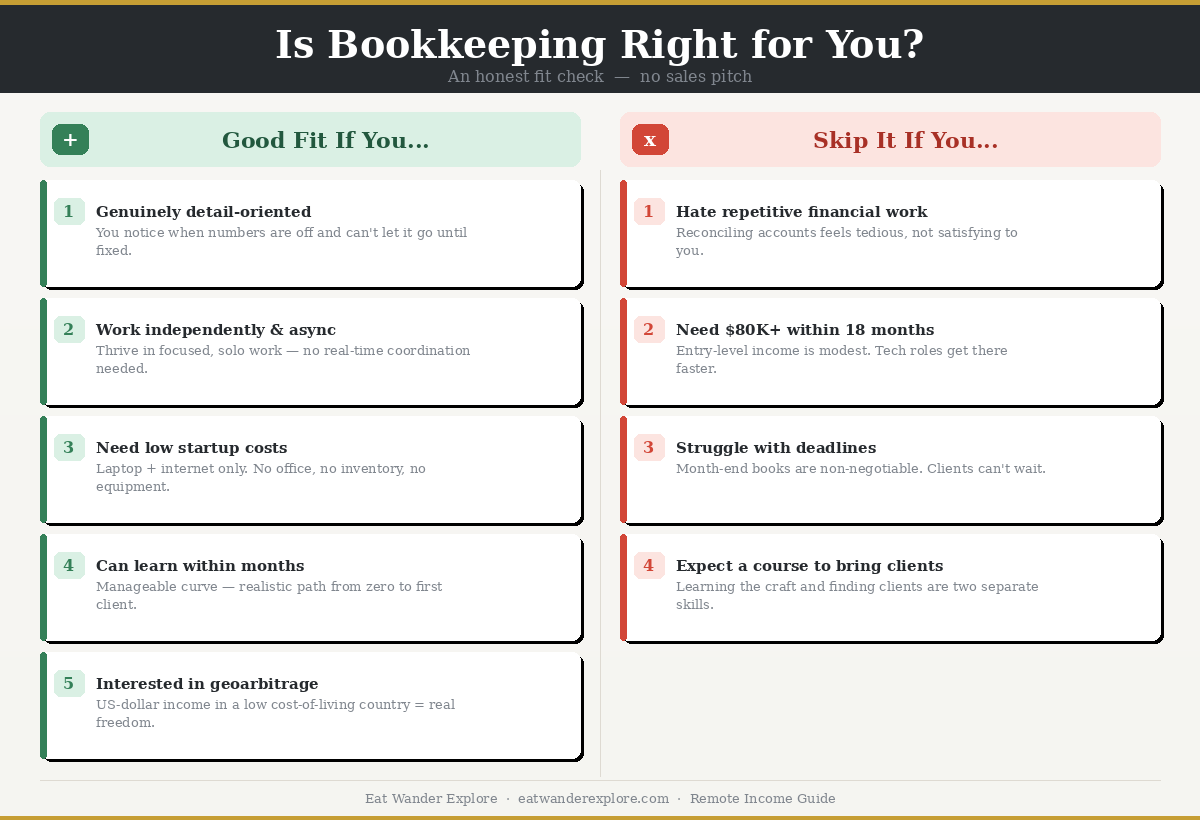
Bookkeeping tends to be a good fit if:
You are genuinely detail-oriented. Not “I like to think I’m organized” detail-oriented, but the kind of person who notices when numbers don’t add up and feels bothered by it until they do. Bookkeeping errors compound - a miscategorized transaction in January can create a mess by December - and accuracy is the job, not a nice-to-have.
You prefer working independently and asynchronously (in different time zones and different working hours). Most bookkeeping work happens without real-time coordination. You log into the software, do the work, reconcile the accounts, and send a report. If you thrive in autonomous, focused work without a lot of interruption, this suits you well.
You want a business with low startup costs. Unlike many service businesses, bookkeeping requires minimal upfront investment. You need a computer, an internet connection, and QuickBooks Online (which clients typically pay for directly). There’s no inventory, no physical space, and no real equipment costs beyond those ones.
You are making a career switch and need something learnable within months. Bookkeeping is not a shortcut to wealth, but it is one of the more realistic paths to employable or freelanceable skills within a reasonable timeframe for someone starting from scratch. The learning curve is real but manageable with focused effort.
You are interested in location independence or geoarbitrage. For reasons we’ll detail below, bookkeeping income combined with lower cost-of-living locations is one of the cleaner combinations available for people who want to work remotely from abroad.
Bookkeeping is probably not the right fit if:
You are genuinely averse to detailed, repetitive financial work. Some people find reconciling accounts and organizing transactions deeply satisfying. Others find it tedious to the point of being unsustainable. Be honest with yourself here. Doing work you dislike for the sake of remote flexibility tends not to last.
Your primary goal is high income quickly. Entry-level bookkeeping income, whether as an employee or freelancer, is modest. If you have a family to support and need $80,000 within 18 months, there are faster paths to that level in tech. Bookkeeping builds over time.
You are not self-directed or reliable with deadlines. Freelance bookkeeping clients depend on their books being done on time. Month-end deadlines matter. If accountability and follow-through are genuine weaknesses, the freelance model will be difficult regardless of how well you know the software.
You expect a $5,000 course to hand you clients. The learning is the learnable part. Client acquisition - actually finding, pitching, and landing businesses that want to pay you - is a separate skill that requires effort, persistence, and in most cases a willingness to do some sales activity. More on that below.
How to Actually Get Started: A Realistic Overview
The path from zero to first paying bookkeeping client is more straightforward than most people expect, but it does have a logical sequence that matters. Jumping straight into client work before you understand the fundamentals is the most common mistake beginners make, and it tends to erode confidence fast.
At a high level, you’ll move through a few distinct phases: building foundational knowledge, getting hands-on with the tools the industry actually uses, gaining low-stakes practice experience before going paid, and then setting up and marketing your business.
Each phase builds on the one before it. The good news is that free and low-cost resources exist for almost every step: Khan Academy, QuickBooks’ own free training through their ProAdvisor program, SCORE mentorship, AccountingCoach, and others. You do not need an expensive program to access quality learning material.
What most people do need is a clear sequence and a way to know when they’re ready to move forward. That’s the piece that gets lost when you’re trying to stitch together free resources on your own - you end up with knowledge gaps or spend time on the wrong things in the wrong order.
If you want a structured path that maps out exactly what to learn, in what order, with curated resources and action steps at each stage, that’s exactly what our $10 self-guided roadmap covers - from first principles through landing your first clients.
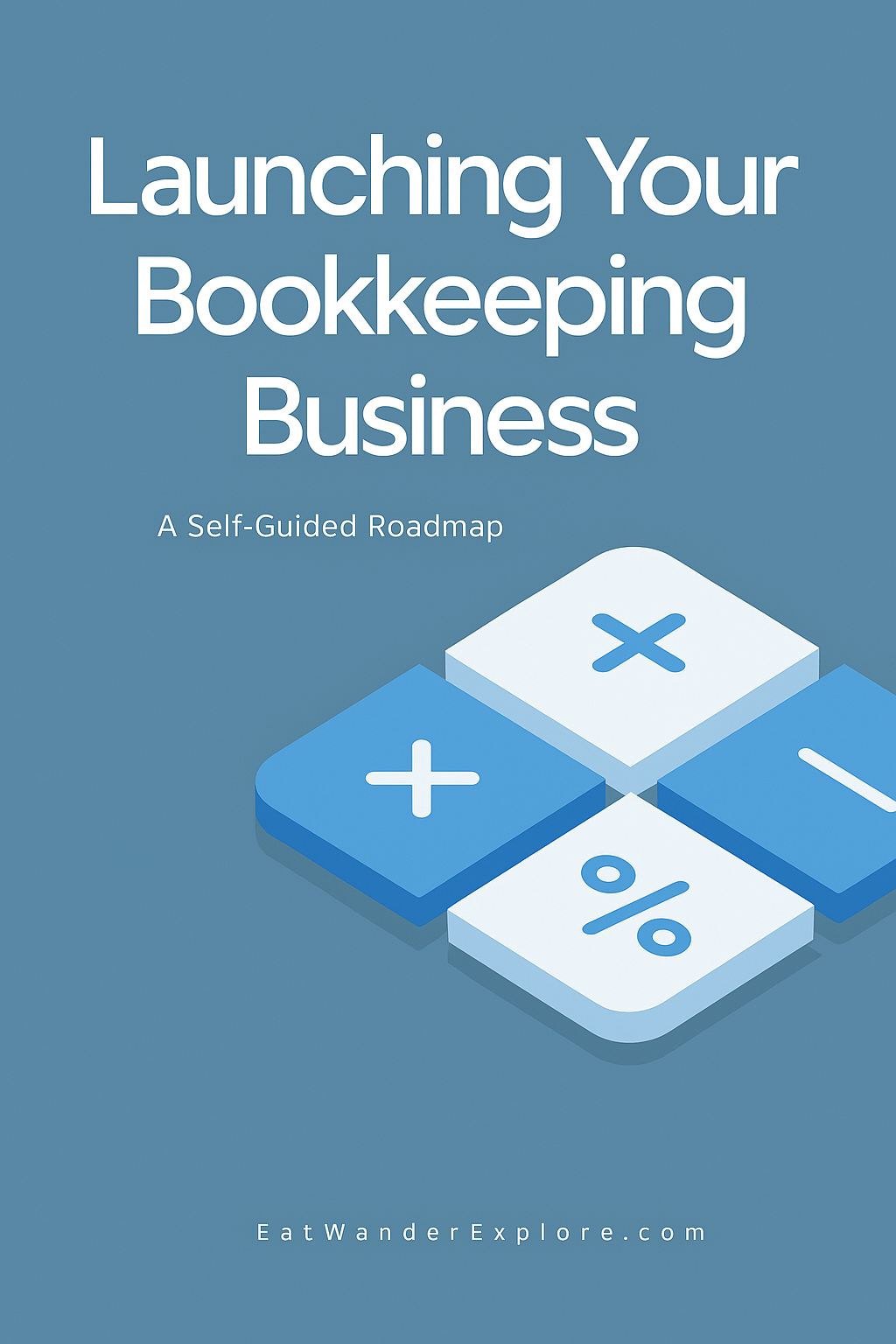
Launching Your Bookkeeping Business: A Self-Guided Roadmap is the ultimate beginner-friendly guide for anyone ready to start a flexible, low-cost, and rewarding freelance career in bookkeeping—even with zero prior experience.
This practical, no-fluff book walks you step-by-step through launching a real bookkeeping business from scratch using only free and affordable tools. Whether you're switching careers, returning to work, or simply exploring a side hustle, you'll gain clarity, confidence, and the skills to succeed.
Inside, you’ll learn:
What bookkeeping is (and isn’t), and whether this career fits your goals
How to master accounting basics with free resources like Khan Academy
How to get QuickBooks Online certified (and why it’s a game-changer)
How to practice before serving real clients—without guessing or gambling
Exactly how to plan, set up, and register your business the right way
How to define your services and set fair, competitive prices
Proven marketing strategies to land your first clients (no ads required)
How to onboard, serve, and retain clients like a pro
Long-term strategies to scale your business, avoid burnout, and stay current
Each chapter includes curated external resources, real-world case studies of people who started from scratch, and action prompts to guide you forward. You’ll also find annotated appendices packed with templates, checklists, and expert-recommended links.
No degree? No problem. You’ll discover how countless successful bookkeepers built thriving practices with determination and smart learning—not expensive credentials.
Whether you want to earn $1,000/month from home or grow a full-fledged practice, this self-guided roadmap shows you how—step by step, at your own pace, and under budget.
The $5,000 Course Problem - And a Straightforward Alternative
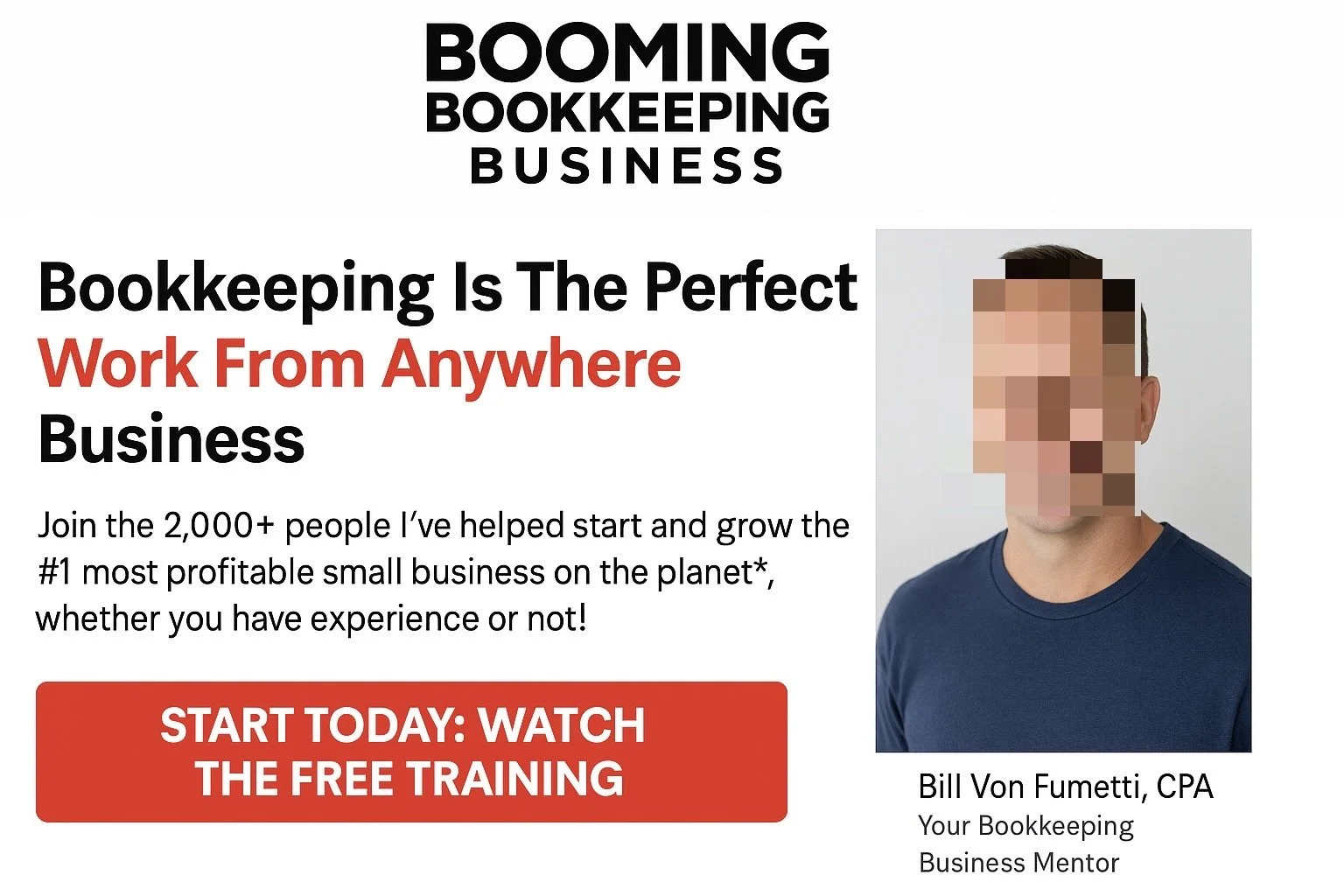
If you’ve been looking into bookkeeping as a remote career, there’s a reasonable chance you’ve encountered heavily advertised programs promising that you can build a lucrative bookkeeping business from home, often with price tags in the range of $2,000 to $5,000 or more.
We’ve written extensively about one of the most prominent of these programs - first in our review of Booming Bookkeeping Business (the $5,000 course) and in our Keyboard Rich review (the book and funnel used to lure people into buying the Booming Bookkeeping Business course). We paid for the program, went through it, and shared our honest experience - including the parts that didn’t work as advertised, the limitations of key marketing strategies like the QuickBooks ProAdvisor directory for people living outside the US, and our interactions with the program creator.
What we found is worth summarizing here because it’s directly relevant to anyone trying to figure out how to start in bookkeeping without spending a fortune.
The core knowledge covered in these high-priced programs - accounting basics, QuickBooks training, how to set up a business, how to price your services, how to find clients - is not exclusive to any paid course. Intuit provides free QuickBooks training and ProAdvisor certification at no cost. Khan Academy covers the foundational accounting concepts for free. SCORE provides free mentorship from experienced business professionals. The NACPB offers free resources and professional development. None of this requires a $5,000 program.
What expensive programs often do provide that free resources don’t is structure, accountability, community, and mentorship. For some people, those things are worth the price. If you genuinely struggle to self-direct your learning, need someone to hold you accountable, and want direct coaching access when you hit roadblocks, a structured program with mentorship has real value.
But if you are self-directed, motivated, and willing to follow a clear roadmap without hand-holding, the same knowledge is available for a fraction of the cost.
We created Launching Your Bookkeeping Business: A Self-Guided Roadmap specifically for that person - someone who wants a comprehensive, logically structured path through everything they need to know to launch a bookkeeping business, without paying thousands of dollars for it. At $10, it covers the same territory as those high-priced programs, minus the live coaching (which you can get through SCORE for free) and community (there are also free facebook groups). It includes step-by-step chapters, curated free resources for each phase, practical action prompts, and appendices with templates and tools, including guidance on how to price your services.
The main trade-off is honest: this is a self-directed resource. There is no coach to call, no accountability partner built in, and no community included in the $10. For people who need that infrastructure, a more expensive program may be worth it. For self-starters who just need a clear map and the right free resources pointed out, the $10 guide is the more rational choice.
Plus, even for the people that go for the community/mentorship programs, everyone tends to find immense value from our $10 book.
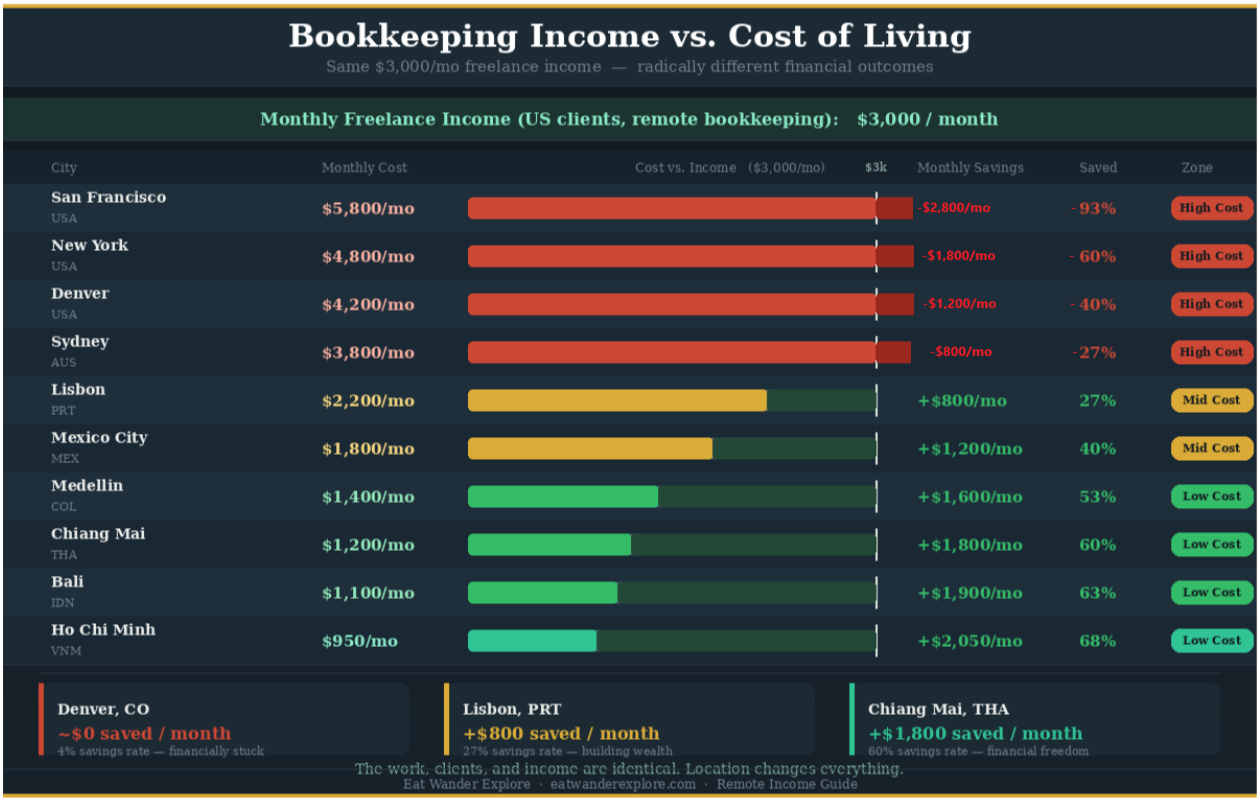
Remote Bookkeeping as a Geoarbitrage Strategy
This section is relevant if you’re already thinking about location independence, living abroad, or reducing your cost of living as part of a larger financial strategy. If you’re not familiar with geoarbitrage, the short version is this: earning income in a strong currency like US dollars while living somewhere with a significantly lower cost of living means your money goes much further - and reaching financial independence can happen years earlier than it would in a high-cost home country.
Bookkeeping works particularly well in a geoarbitrage context for a few reasons.
First, your clients don’t need to know where you are. A small business owner in Atlanta or Denver hiring a freelance bookkeeper to manage their QuickBooks account does not care whether that bookkeeper is sitting in Georgia or sitting in Chiang Mai, Thailand. The work gets done the same way either way. As long as communication is timely and the books are accurate, location is irrelevant to the client relationship.
Second, bookkeeping income is typically denominated in the client’s currency. If you’re serving US-based clients, you’re billing in US dollars. If you’re living in a country where $1,500 to $2,500 per month covers a comfortable life for a family - and there are many such places (we know because we've lived in them and shared articles on them) - then even a modest bookkeeping practice of a handful of consistent clients can fund that lifestyle without the stress of trying to compete in a high-cost-of-living market.
To illustrate: a freelance bookkeeper earning $2,500 to $3,500 per month from US clients living in Medellín, Colombia or Chiang Mai, Thailand is in a fundamentally different financial position than the same bookkeeper living in Denver or Sydney. The income, the work, and the clients are identical. The lifestyle and savings rate are completely different.
This is exactly the kind of income-plus-location combination we explore throughout this site in our geoarbitrage guide and across our Cost Strategy section. Bookkeeping isn’t the only path that works this way - remote tech roles, writing, VA (virtual assistant) work, and others can function similarly - but bookkeeping is one of the more accessible ones for people who don’t have a tech background and aren’t starting from a high-earning career they can translate directly to remote work.
One practical note worth flagging: if you’re planning to serve US clients while living outside the US, some of the client acquisition strategies that depend on a US-based business presence - like the QuickBooks ProAdvisor directory or Google Business Profile - have limitations for people located abroad. This is something we encountered directly and documented in our Booming Bookkeeping Business review. It doesn’t make bookkeeping unworkable from abroad - far from it - but it does mean your client acquisition strategy needs to account for it (i.e. start while you're in the US). LinkedIn, referrals, direct outreach, and online communities are effective channels that don’t depend on your physical location. The more connections you have with other people the better (the less people you know the harder bookkeeping will be).
If you’re interested in how geoarbitrage might apply to your specific situation - including visa pathways, relocation logistics, and destination options - our FastLane Abroad service is designed for exactly that.


Frequently Asked Questions
Can I do bookkeeping with no prior experience?
Yes. Bookkeeping does not require a professional background in finance or accounting. Many successful bookkeepers started from completely unrelated fields - teaching, retail, administration, the trades. What matters is willingness to learn the fundamentals, attention to detail, and the discipline to follow a structured learning path. There is a learning curve, but it is manageable and well-documented.
How long does it take to become a bookkeeper?
This varies significantly depending on how intensively you study and what your starting point is. Most people who follow a structured learning path and commit consistent hours can develop the foundational knowledge and software skills needed to take on entry-level clients within three to six months. Building a full client roster to a sustainable income level typically takes longer - often six to twelve months of active business development after you’re ready to start working with clients.
Is bookkeeping still in demand?
Yes. The demand for bookkeeping services is driven by the sheer volume of small businesses in operation, and that number continues to grow. Small business owners consistently rank financial management among their top pain points, and many lack the time, interest, or expertise to manage their own books accurately. The move toward cloud accounting software has made the work more accessible and efficient, but it hasn’t eliminated the need for competent humans to manage it. Bookkeeping is not a declining occupation.
Can bookkeepers work from anywhere?
With reliable internet and cloud accounting software, yes - in practical terms. The work itself is fully location-independent. There are some nuances around client acquisition strategies that work better or worse depending on your location (see the section above on this), but the actual delivery of bookkeeping services has no geographic requirements.
Do I need QuickBooks certification?
Technically no - there is no legal requirement to hold a QuickBooks ProAdvisor certification to offer bookkeeping services. Practically, completing the free ProAdvisor training is worth doing for two reasons: the training itself is genuinely useful for building software competence, and the certification adds credibility when presenting yourself to potential clients. It signals that you know the industry-standard tool, which matters to small business owners who are hiring someone to manage something important.
What’s the difference between bookkeeping and accounting?
Bookkeeping is the day-to-day recording and organizing of financial transactions: keeping the records accurate, current, and categorized correctly.
Accounting involves analyzing those records, interpreting the financial health of a business, providing strategic advice, and handling tax preparation and compliance. Accountants typically hold formal credentials (like a CPA license) and operate at a higher level of financial advisory.
Bookkeepers provide the organized foundation that accountants and business owners work from. In practice, there is some overlap - experienced bookkeepers sometimes take on limited advisory roles, and some accountants do their own bookkeeping - but the distinction is real and matters for understanding what you’re getting into.
What software do bookkeepers use?
QuickBooks Online is the dominant platform in the US and is widely used in other English-speaking markets. Xero is particularly common in Australia, New Zealand, and the UK. Wave is a free option used by very small businesses and freelancers. FreshBooks is used primarily for invoicing with some bookkeeping functionality. Most bookkeeping careers and businesses are built primarily around QuickBooks Online, though diversifying your software knowledge - particularly adding Xero - increases your market and your value to clients.
How do bookkeepers find clients?
This is the piece that many resources underemphasize. Knowing bookkeeping is the prerequisite; finding clients is the ongoing work. Common channels include referrals from personal and professional networks, LinkedIn outreach, listing on platforms like Upwork or the QuickBooks ProAdvisor directory (with location considerations noted above), local networking with small business communities, and niche specialization - focusing on a specific industry like real estate investors, e-commerce sellers, or restaurants - which often makes marketing easier and allows for higher pricing.
The honest truth is that client acquisition requires consistent effort, especially in the early months. It is not passive, and it is the part of running a bookkeeping business that most people find hardest. Factoring that in before you start is important.

Is Bookkeeping Worth Pursuing as a Remote Career?
Bookkeeping won’t be right for everyone. If you want fast, high-growth income, a remote tech career in software development, data science, or cloud engineering will likely serve you better - and that path is something we cover extensively in our Remote Income section. If you want predictable, location-independent income that you can build steadily from scratch without a degree or expensive credentials, bookkeeping is one of the more credible options available.
The combination that makes it most compelling for many people reading this is pairing a bookkeeping income with intentional location choices. A few consistent clients, a low cost-of-living country, and a long-term financial plan can add up to genuine freedom without needing a six-figure salary to get there.
The path is learnable. The work is genuinely remote. The startup costs are low. The demand is real.
What it requires from you is honesty about whether the actual work suits your personality and working style, willingness to invest time in learning before you earn, and the persistence to build a client base that doesn’t materialize overnight.
If that description fits you, bookkeeping is worth taking seriously as a career option. And if you want a clear, affordable starting point - without paying $5,000 for someone to tell you things you could learn for free with the right guide - our $10 roadmap was built for exactly that purpose.
*If you’ve already looked into Booming Bookkeeping Business (or been convinced by their funnel starting with Keyboard Rich) and want our honest breakdown of what that program does and doesn’t deliver, read our full review here: Is Booming Bookkeeping Business a Scam? Our Legitimate Review. And for a focused comparison of the Keyboard Rich book and funnel versus the full Booming Bookkeeping program, see our Keyboard Rich Review.*
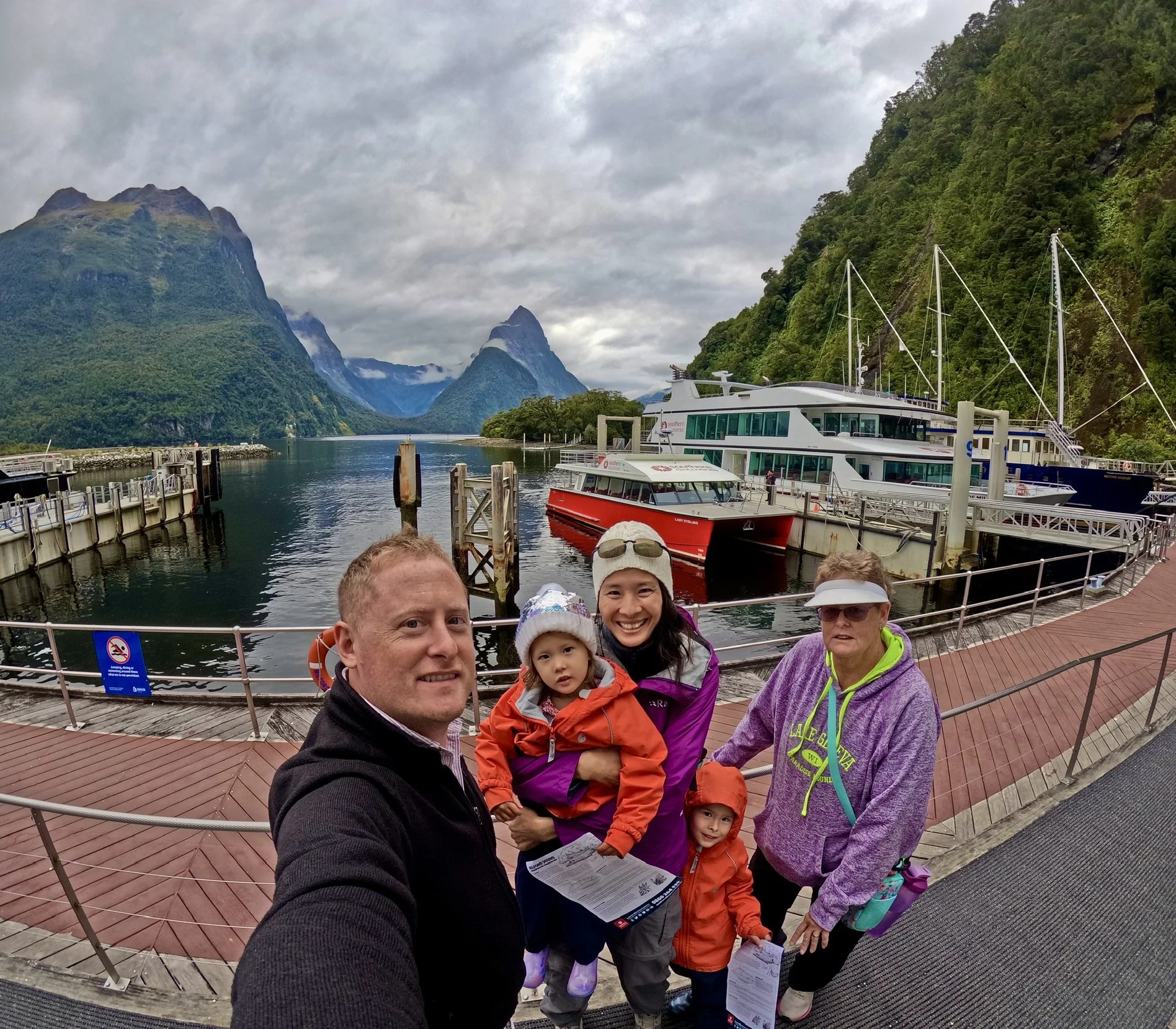
Thank you VERY much for reading our article. We actually created this website to help people reach financial independence. Did you know that by having a remote job and traveling endlessly, or living in a country that has low costs of living, you can actually reach retirement quicker? Plus, retirement abroad is up to 75 percent cheaper as well! Learn more by exploring our website.
See our Thank You page to sign up for our free weekly newsletter - you’ll receive only 1 email per week letting you know about our latest travel articles, remote-work life, and amazingly affordable destinations!
Found this post useful? Buy us a coffee to help support this site’s running costs OR share this article with a friend.












![Tech Elevator Demystified: Reviews, Legitimacy, and Winning Alternatives [2024]](https://images.squarespace-cdn.com/content/v1/5a028c7bbce1766d207a8a6f/1707008329038-96GH4TTYZATP6N3WDWXR/tech_elevator.png)
![Cracking the Code: Coding Dojo Reviews, Legitimacy Check, and Top Alternatives [2024]](https://images.squarespace-cdn.com/content/v1/5a028c7bbce1766d207a8a6f/1707007756149-VSJNN2PHHX2RWK6RSVQM/coding_dojo.png)

![App Academy Unveiled: Reviews, Legitimacy Check, and Top Alternatives [2024]](https://images.squarespace-cdn.com/content/v1/5a028c7bbce1766d207a8a6f/1707008090320-IUIIV4T416FP5ILRGK5W/app_academy.png)
![CareerFoundry Decoded: Reviews, Legitimacy, and the Best Alternatives [2024]](https://images.squarespace-cdn.com/content/v1/5a028c7bbce1766d207a8a6f/1707008030234-CZTE1805JUCU2M2GK7RO/careerfoundry.png)