Tales of the Past - A Time Traveling Tourist
By Nobin
Tales of the Past
I used to visit places for just a few days or, occasionally, up to a few weeks at most. However, I’ve been here now for just over 3 years, and that certainly wasn’t my intention when I arrived. Many of you have visited places, perhaps of significant historical reference or just for the allure of the culture, to learn a little bit more about them. Other times, you likely go solely for the food, or the beaches. But I’m not sure that anyone really thinks they won’t return home after they have arrived. And as chances have it, that’s exactly what happened to me on this particular trip.
There is a particular kind of fatigue that sets in when “a few days” becomes “a few months,” and then becomes a season, and then becomes a year. At first, you tell yourself it’s temporary. Then you realize the temporary has its own gravity.
If there’s anything that I’ve learned from traveling around the world, it’s that history really isn’t what I remembered it to be. That is to say, it isn’t precisely like what I was taught that it was, or what I had imagined it to be when I was younger. I guess, even though I know this is where it began, I still find it difficult to look at this place now and see that it is such a small place - without the Island. I’ve never even imagined it without the Island, and although I was taught that it was built - figuratively “overnight,” it has never really occurred to me that this is the way that it was when it all happened. Or the amazing scale of what was built. Just that it was once smaller.
It’s strange how the mind refuses to let go of what it already thinks it knows. Even when you’re standing in the right place, at the right time, your imagination keeps trying to rebuild the future on top of it.
Learning How it Started
That isn’t an uncommon thing though. I’ve been to many places around the world and have been surprised at just how different history is, when you’re actually in the place that it happened at, than what you read about in a book written in some other place or some other time. A book written in 2019 in New York City about an event that occurred in 1819 in Singapore is likely to have lost a lot of substantial information, or - at the very least - the perspective of people at that time. Even the author can get things wrong. You see, the interpretation of the story can be different in just about every era of time, so unless you’re there in person yourself - at the right time - the interpretation of the words will not be entirely the same.
I used to think that meant you needed better sources. Now I think it means you need better senses. Not sharper eyes, but a different kind of attention. The kind that notices what people stop saying out loud because it has become too ordinary to mention.
At least that’s what I thought before. Now, I realize that it’s even more than that. You actually have to feel what the people were feeling. You have to have lived in their shoes - so to speak. A few days or a few weeks won’t quite cut it. If you really want to understand, you have to live there and become one of them. See what they are seeing, hear what they are hearing, and feel the emotions that they are going through on a daily basis. That helps clarify the reality of what happened. And without that, it’s just a story written using a few pieces of data, a surface-level analysis, that is assumed as the truth because it fit that data and the perspective at that point in time. So, the stories that have been told are myriad, and different, but none of them by themselves - or even together - will actually make you truly understand how it started.
The hardest part is that emotions don’t travel cleanly across eras either. Fear is familiar, but the shape of it changes. Pride is familiar, but what people are proud of changes. The same feeling can attach itself to completely different beliefs, and you won’t know that until you’ve been there long enough to watch it shift.
I've witnessed this many times now.

The Grand Forest
Yet, as I stand here now, looking out over the trees amongst the buildings, it feels so tiny, as if I were standing in an empty field watching a few people plant seeds in a place that I thought, or knew, would be a grand forest. The grandeur and marvel of most of the historical places that I’ve been to has been lost, as what was impressive 1,000 years ago is not so impressive when compared to what you are used to seeing in your own time. Even by imagining these places as full and complete, new and active, and at the precipice of their times - not at the ruins that they are today - still doesn’t seem as impressive as you might have imagined before you arrived. You’d likely have imagined them to be just as impressive as the places that you know now - or perhaps even more so because of some exotic feeling about what your imagination thought it could have been. What exists in your idea of “now” is likely the grandest that things have ever been.
And yet, the “smallness” you see in these places from the past is part of the lesson. When you expect the grand forest, you forget that every forest begins with a few hands in soil, with nature doing most of the work quietly, over time. People are the same. They build empires and cities, and then they forget the invisible agreements that held them together while they were building.
Now, when I visit a place that I haven’t been to before, I really try to get into the role. I really try to feel like I’m there, at that time, and I really try to understand the people who are there with me so that I am not just a traveling tourist. I actually live it, and feel each part of it, as if I’m walking amongst ghosts who no longer exist - but to me, they do. I am walking around with them, talking to them, and falling into their place in time mentally like an actor would do to get into character.
It’s an odd experience, stepping from one era into another, because you don’t simply notice what is different. You notice what is missing. The missing assumptions. The missing trust. The missing expectation that tomorrow will behave like today.
Now, I’m something quite different than your typical tourist. I suppose you might even call me a time traveling tourist. And right now, I’m “stuck” here, in this place, as long as it takes to really understand how it happened.
I don’t mean stuck the way a person is stuck in a room. I mean stuck the way a question can be stuck in your mind until it stops being a question and becomes a pattern you can’t unsee.
How nipah took half of humanity with it and why nobody seemed to respond.
I used to think “nobody responded” meant nobody knew. Or perhaps that it was incredibly fast. Now I think it can mean something else entirely. Sometimes people know something is happening and still do not coordinate, not because they are ignorant, but because they are exhausted, distracted, divided, or convinced that the warning is just another kind of weapon.
Where I've Been
Sometimes the only way I can keep the eras straight is to write them down plainly, like coordinates. Not as trophies, and not as proof, but as a reminder to myself that the feeling I’m trying to understand didn’t begin in one place, or end in one place. It repeats. It changes its clothing. But it repeats.
Here’s a list of some of the places I’ve needed to visit—the ones that mattered most, the ones I keep using as reference points. There have been other stops along the way, smaller visits made to confirm details or test an assumption, but these are the main coordinates that held the pattern in place:
• 496–492 BCE Śrāvastī
• 474–476 CE Ravenna
• 541–549 CE Constantinopolis
• 1215–1217 CE Westmonasterium
• 1347–1352 CE Messina
• 1520–1521 CE Mēxihco-Tenochtitlan
• 1561–1562 CE Gobernación de Chile
• 1633–1636 CE New Plimouth / Patuxet
• 1665–1666 CE London
• 1753–1754 CE Bath
• 1776–1777 CE Philadelphia
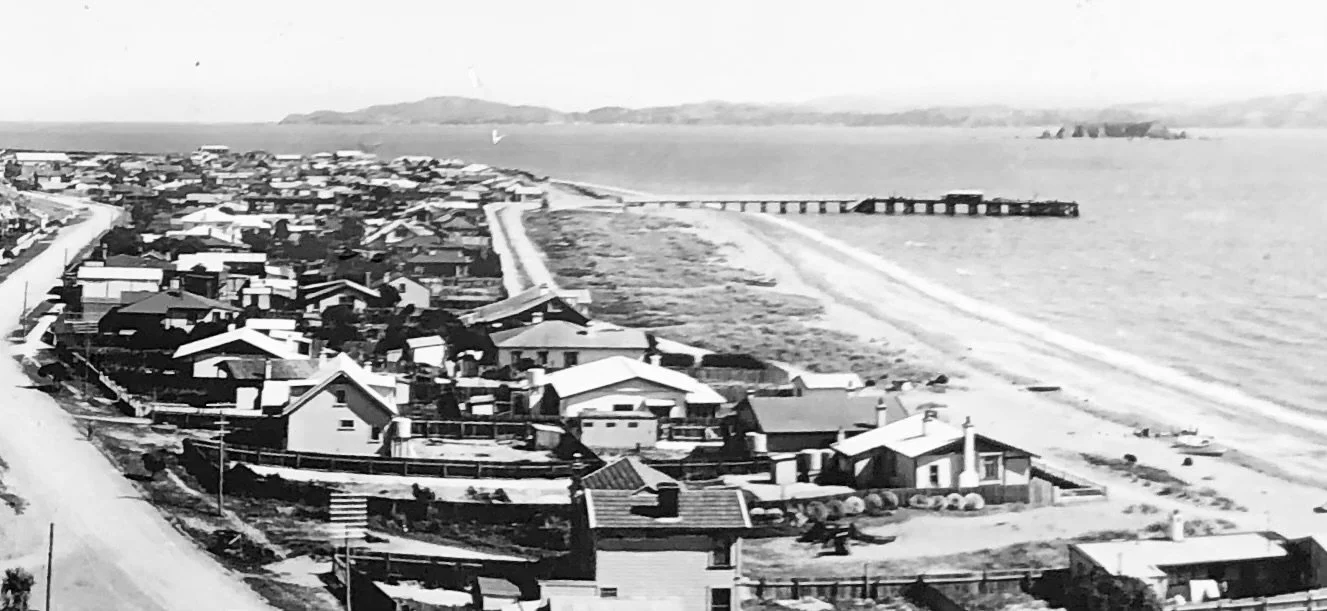
• 1893–1894 CE Wellington / Pōneke
• 1919–1920 CE Seattle
• 2017–2021 CE Singapore / Singapura
I don’t usually write the modern ones this way, but some places are easier to name by numbers than by politics.
This time, particularly in 2.47, 102.32 and 2.93, 101.44 over the last few years, then more recently 1.35, 103.81, for reasons that probably don’t need explaining.
What I've Learned So Far
These are not conclusions so much as corrections. I started with a theory, but living inside these eras has made it harder to believe in simple causes. My experiences have been slowly revising that theory for me.
What I’ve learned here isn’t only about disease, bats, or pigs. It’s about the cost of agreement. When the world is full of louder noises - wars, politics, campaigns, and a string of warnings that turned out to be mostly nothing - people begin to treat every alarm as a performance. They don’t stop hearing the bell. They simply stop moving.
And the economy, as strange as it sounds, has its own emotions. It can deny for a long time. It can call something “temporary” until temporary becomes the new rule. Sometimes the markets and the schedules and the ports and the plans keep going not because people believe it’s safe, but because they believe stopping would be worse. So they keep going, and the motion itself starts to look like proof that nothing is wrong.
I’ve seen that kind of hesitation before, even in places that didn’t have microscopes or broadcasts or graphs.
In Western London, between 1215 to 1217, the shift didn’t feel like a paragraph in a charter. It felt like ordinary people quietly changing their answers to ordinary questions. Who do you go to when something is taken from you? Who can you expect to protect you? Who has the right to punish? When those answers wobble, trust doesn’t disappear. It shrinks. It becomes local. It becomes personal.
In Ravenna, 474 to 476, it was not a dramatic moment with a clear ending, at least not from inside it. That's not how it felt. The titles remained. The words remained. The buildings remained. But the promises stopped traveling as far. You could feel it when someone stopped waiting for an answer from “the center” and started making a different kind of deal with the nearest authority that could actually do something.
And in Messina, when the Black Death arrived, it wasn’t only the sickness that I remember most. It was the incentives turning inside out. A sense of fear was in the air - not just of the disease, but of someone finding out. The moment when truth became expensive. The moment when reporting a danger began to feel like inviting punishment, and silence began to feel like safety. That’s when coordination starts to fail even before the systems do.
Wellington, in 1893 and 1894, has stayed with me for the opposite reason. There are times when a society widens the circle of who counts before it is forced to by collapse. It doesn’t feel heroic when you’re standing in it. It feels like paperwork and arguments and the stubborn refusal to accept that only a few should decide for the many. But from the perspective of other eras, it feels like a kind of repair.
Seattle, 1919 to 1920, taught me something else: order is not the same as cooperation. You can impose order, but you cannot impose belief. When people withdraw their belief, they don’t always riot. Sometimes they simply stop participating. And when enough people stop participating, the city still looks like a city, but it doesn’t function like one.
I’ve tried to follow that difference in places that were built on rules or habit. In Ragusa, when quarantine first became something written into law, I wanted to see whether a rule could change the incentives people were feeling when concealing what was happening. I watched Edo enforce a kind of closure that made order feel routine, and then later watched the shock of contact return at Uraga, when the routine could no longer hold. I followed the first cholera waves through İstanbul and out into the provinces, and I stood in Bianjing—where the records were meticulous even as the world outside the page began to rupture.
There were other stops too: Otaheite and the wider island chains after first sustained contact, border towns, mining cities, ports. Those visits weren’t made for the drama of the event, but to confirm the same quiet mechanism: when trust fractures, coordination becomes expensive, and the price is always paid later. There were other places as well, but it was these that helped me understand what the others meant.
So when I think about the future I came here to understand, I don’t think it was only a virus. I think it was a series of delays that felt reasonable at the time. I think it was a long season of “not now,” repeated in different accents, repeated until trust was thin enough that even a clear danger could not gather a shared response.
And when it finally mattered most, that became the whole problem. There was so much noise that nobody could hear anything⳹
3 Tut 1737