
Becoming Part of a Place
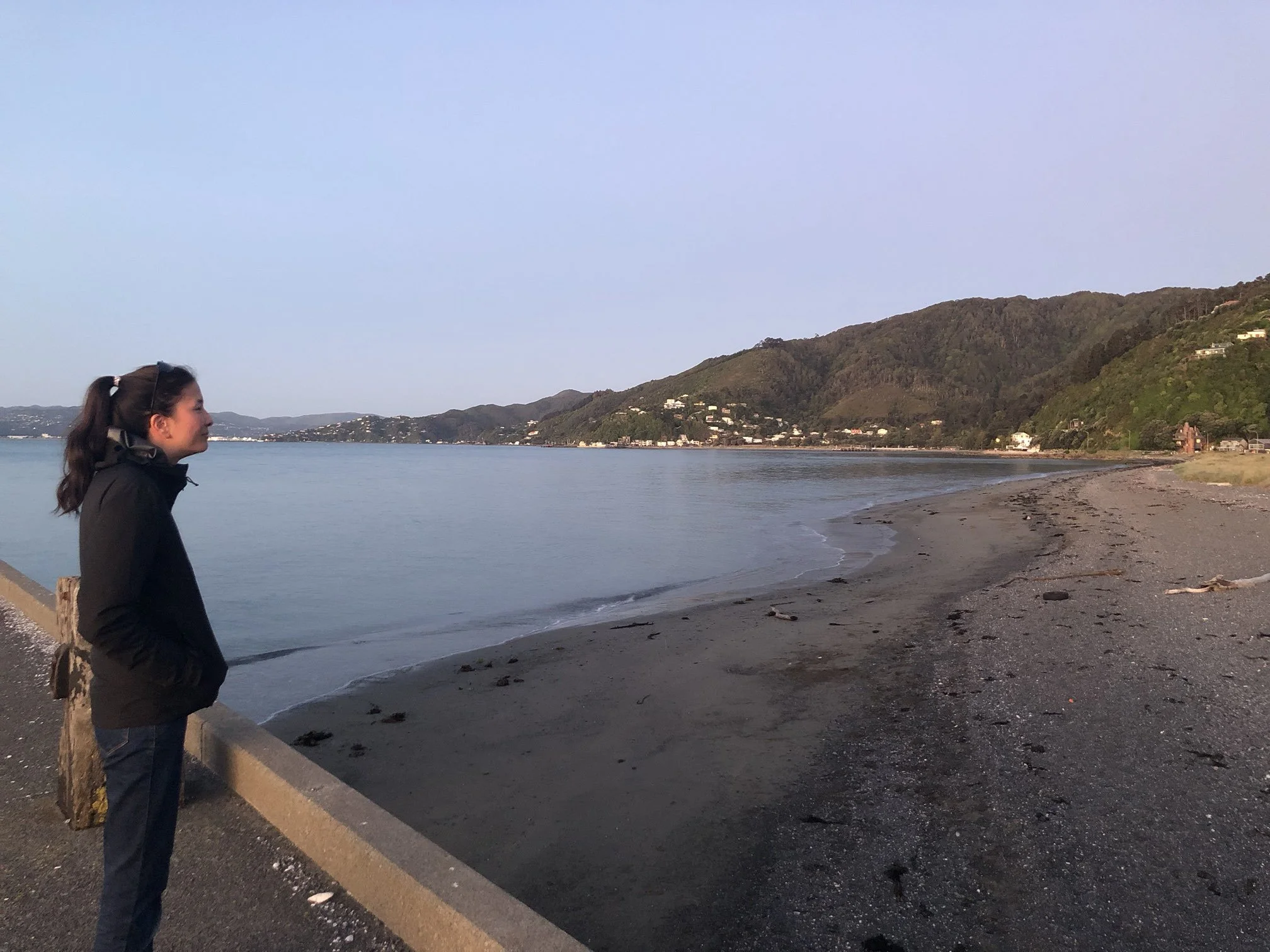
Eastbourne, our home for three years, Mother's Day to Mother's Day.
You can live somewhere for years and never belong there. You can also feel welcome in a place within a week. Over five years of slow travel, and three years in a village in New Zealand, we learned that the difference is mostly up to you.
Living somewhere isn't belonging there
From 2018 to 2023 we moved every one to three months. That's long enough to learn where the market is, which café opens earliest, and how to say thank you. It's rarely long enough to be missed when you leave.
That was fine while we were traveling. But when we decided to settle, we wanted something we'd never had on the road: to be part of a place, not just passing through it.
In May 2023 we moved into a house in Eastbourne, a small seaside village across the harbor from Wellington. We walked in with the keys on Mother's Day, and handed them back, clean, on Mother's Day three years later. In between, a place that had been a dot on a map became home.
Five weeks after we arrived, we posted a photo of our kids on the deck at sunset, in backpacks and boots, arms out. Our caption said we'd found our favorite spot, and that "we just had to have the courage to look." Finding the place took courage. Becoming part of it took something else: time, humility, and saying yes.
Why it matters
Belonging isn't just a nice feeling. It's what makes a move last.
It's how you get through the hard months. Every move has them. People who know you make them shorter.
It's how you learn how things really work. Which doctor has openings, which landlord is fair, where to buy fish on Friday. None of it is online.
It's what you owe the place. People who move somewhere cheaper or safer take something from it, whether they mean to or not: housing, attention, change. Joining in is how you give some of it back.
This guide is what we've learned so far. We're still learning. Most of it applies anywhere, though our freshest examples come from New Zealand.
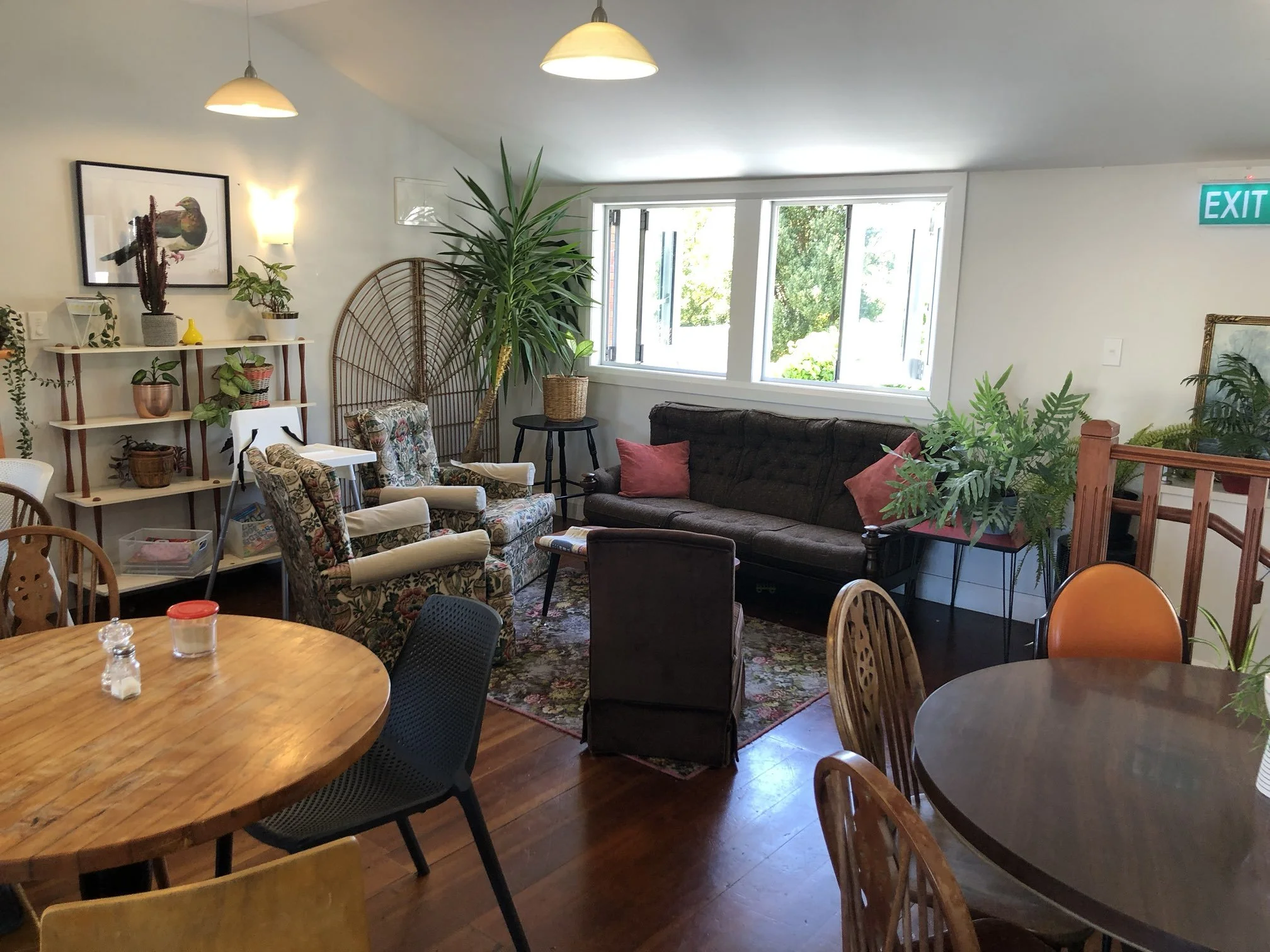
Small villages run on regulars. Be one.
Arrive as a guest
The first rule we learned on the road still holds after settling down: you arrive as a guest, even with a residence visa in your passport. Locals don't owe you a welcome. You earn it by how you show up.
Slow down
In our first year of travel, we moved too fast, and it cost us. Moving fast cost money: that year averaged about $122 a day for the two of us, against about $71 a day once we slowed down. It also cost connection. You can't become a regular anywhere in a week.
Slowing down is the single biggest thing you can do to belong. It turns a stranger at the counter into a face people recognize, and then into someone they ask about when you're gone for a week.
Learn the rhythms before you change anything
Every place has its own pace. In Eastbourne, food fit into daily routines and coastal weather. The cafés were the backbone of the day, the takeaways carried school nights, and regulars mattered more than passing trade. None of that was written down anywhere. We learned it by showing up.
Watch before you act:
When does the place wake up, and when does it close? Small towns in New Zealand close early. We had to stop expecting the US at 9 pm.
How do people greet each other? In shops, on walking tracks, at the school gate.
What do people complain about, and what are they proud of? That's where you learn what matters.
Spend where your neighbors earn
Where you spend money is one of the clearest signals of whether you're part of a place. A small village runs on a handful of independent businesses, and they survive on regulars.
Buy coffee from the same café, and learn the name of whoever makes it.
Get takeaways from the local shop, even when a chain is cheaper.
Get haircuts in the village. (That one changed everything for us, as you'll see.)
Pay fair prices. Haggling hard over small sums with people who earn far less than you isn't a win.
It's also why we're building Kaimunity, a pickup-first food app for local cafés and eateries in New Zealand. The idea started in the waits at our village takeaways, and it's built to keep more of each order with the local business. We write more about it in Giving Back Where You Live.
Be mindful of what you change
People who move somewhere for a better life change it a little, just by being there. More newcomers can mean higher rents for locals and shops that cater to visitors instead of residents. You can't avoid all of that, but you can be careful:
Rent long term from local landlords, rather than keeping housing out of the market as short stays.
Don't treat a neighborhood as a backdrop for photos.
Ask before you photograph people, and their homes, their children and sacred places.
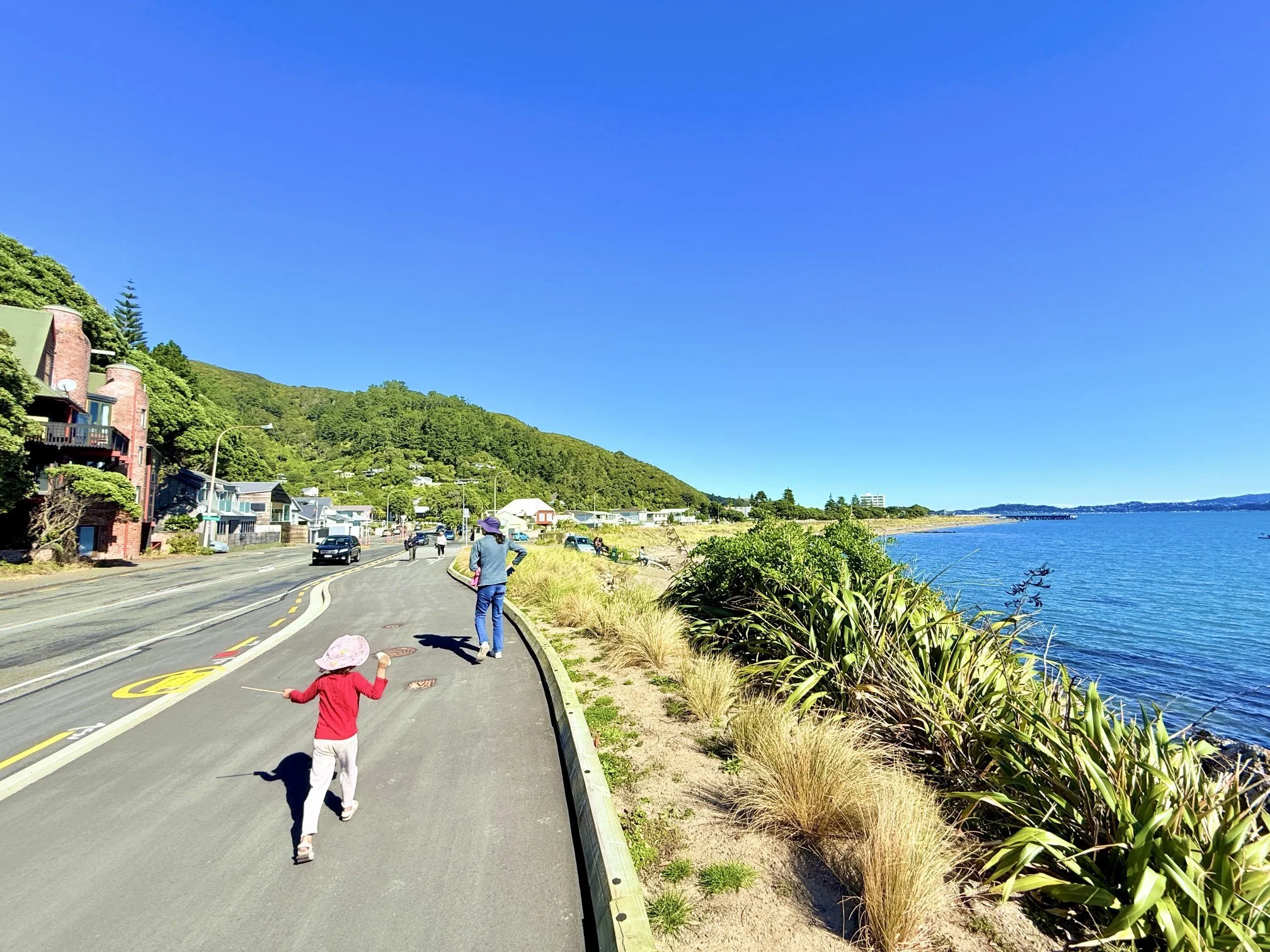
Eastbourne, March 2025. One invitation from the village barber led to a mau rākau class in Lower Hutt.
Say yes to the invitation
Belonging is something you're invited into. Then you have to learn it. The invitation usually comes from somewhere you don't expect, and the only thing you have to do is say yes.
The barber
In March 2026, a Māori barber in the village cut our son's hair and invited Bradley to a class. Rain or shine, he said, and bring a jacket.
That Sunday, Bradley stood in a parking lot beside a sports ground in Lower Hutt, across from a marae, a Māori community's meeting grounds, learning mau rākau, the Māori art of weaponry, with the taiaha, a long wooden staff.
In Bradley's words:
We began with a hongi, pressing noses with every person there, one by one. It was fairly intimate, sharing breath, the hā, with each person there. Then it was not a game. It felt a lot like the hand-to-hand and bayonet training I'd had in the Marines, except that the weapon was a long staff, not a rifle. We finished with a hongi too. I didn't know anyone apart from the barber, but afterward it felt like everyone was in it together, and I felt very welcome.
What it taught us
The invitation came from being a regular. It wasn't a tour or a cultural experience we'd paid for. It came from getting a haircut in the village, from someone who saw us as part of it.
Showing up mattered more than knowing what to do. Bradley didn't know anyone or the right words. He went anyway, and went early.
It showed us what to learn next. The class spoke mostly English, with words in te reo Māori he didn't understand. Bradley decided the language had to come first. He plans to go back once he understands more of what's being said.
How to be invited
You can't schedule an invitation, but you can make one more likely:
Be a regular somewhere. A café, a barber, a market stall, a park run.
Talk to people, and ask about them more than you talk about yourself.
Join something with a purpose: a volunteer group, a sports club, a community garden, a beach cleanup.
When someone invites you, go. Even when it's raining. Especially then.
Go with humility. You're there to learn, not to be the interesting foreigner.
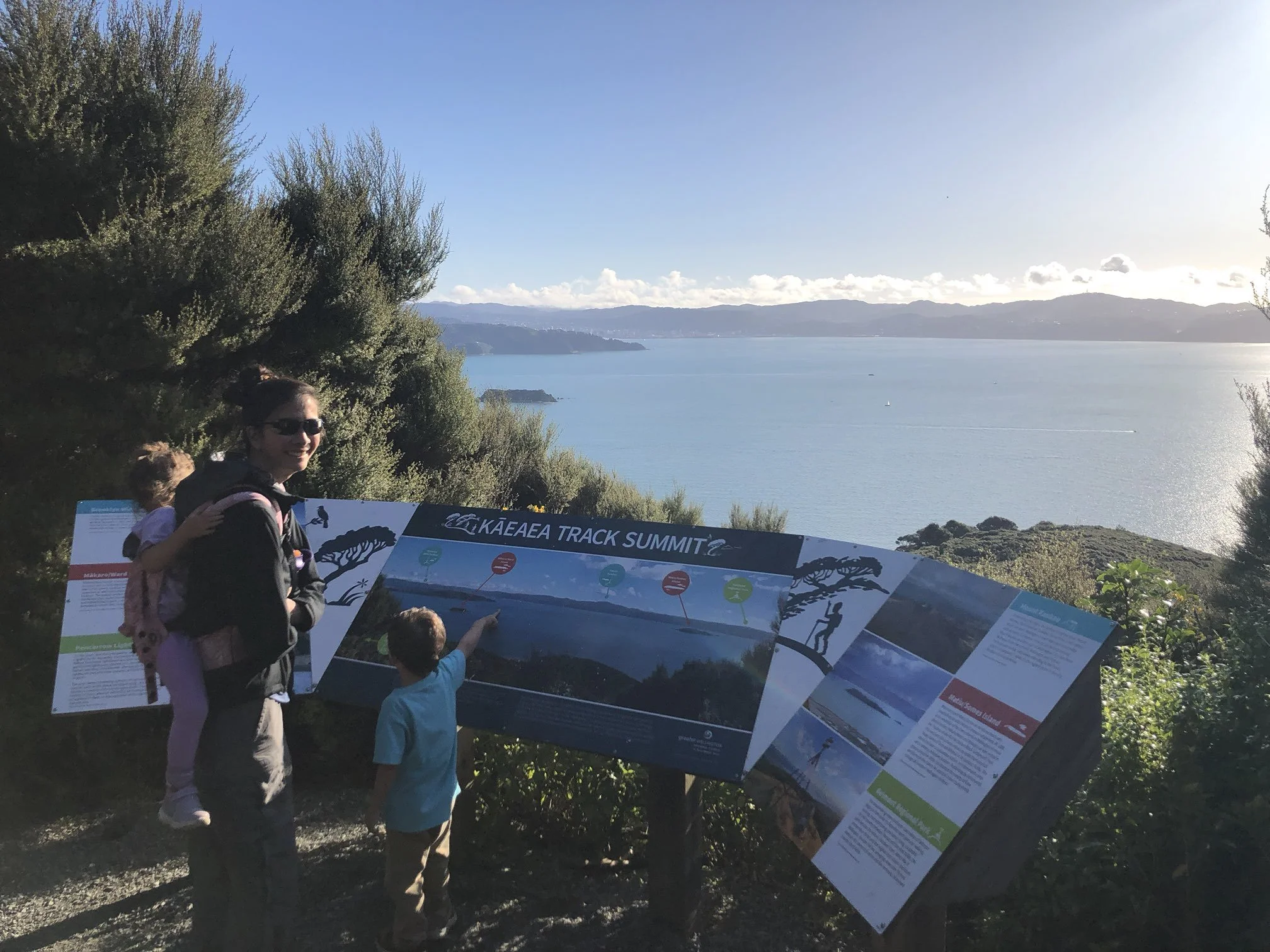
Learning as we go: museums, books and a few words of te reo at a time.
Respect the land and its first people
Every place you move to has a history older than its current borders. Belonging somewhere means learning that history, especially the history of the people who were there first.
In New Zealand
New Zealand is a bicultural country, built on Te Tiriti o Waitangi, the Treaty of Waitangi, between Māori and the Crown. Te reo Māori is an official language. You hear it in greetings, place names, schools and the news every day.
We didn't arrive knowing much, and we're still learning slowly. As a family, we teach our kids some of the language, take them to museums like Te Papa, and read books together, to make it familiar to them and to us. In Bradley's words: "So we are trying, but we're not moving at a rapid rate. We are learning as we go."
Language comes first
The mau rākau class taught Bradley something simple: you can't really take part in a place until you understand what people are saying to you. That doesn't mean fluency. It means making a real start.
Learn the greetings and use them. Mōrena for good morning is a start. People notice when you try.
Learn to say place names properly. Many New Zealand place names are Māori. Getting them right is basic respect.
Learn what a few key words mean, like marae, iwi and tikanga, so you understand what you're hearing.
We go deeper on this in Learning the Language and Culture.
Anywhere you go
The same idea applies everywhere we've lived:
Learn the history before you share opinions. Especially colonial history, and especially if you come from a country that played a part in it.
Respect sacred places. Ask before you photograph, climb or enter. A mountain can be a hiking route to visitors and an ancestor to the people who live around it.
Treat Nature as something you're part of, not scenery. Stay on the track, take your rubbish home, and leave Animals alone. In New Zealand, so many native Birds live nowhere else on Earth, and local communities work hard to protect them.
Listen more than you speak about local politics, at least until you've lived there long enough to understand them.
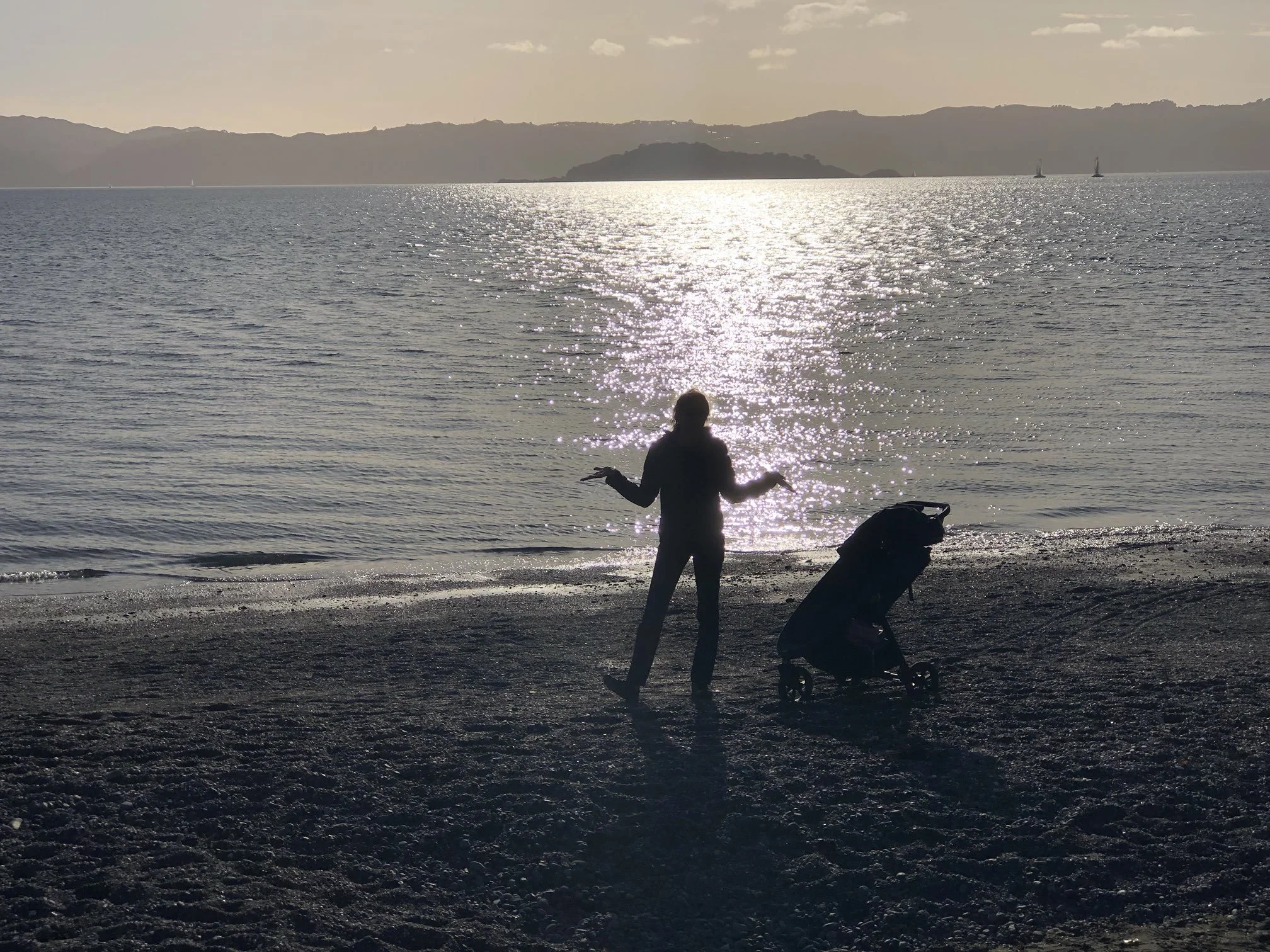
Leaving felt like leaving home.
What belonging asks of you
None of this is complicated. It just takes longer than a visa does, and nobody checks whether you've done it.
A checklist for your first year
Pick one café, one shop and one barber or hairdresser, and become a regular
Learn the local greeting, and use it every day
Learn to pronounce the place names around you
Read a short history of the place, written by people from there
Join one thing with a purpose: a club, a volunteer group, a class
Say yes to the first invitation you get
Spend most of your money with local, independent businesses
Ask before you photograph people, homes or sacred places
Give back in one small, regular way
It takes time, and that's the point
We lived in our Eastbourne house for three years to the day. For our daughter, it was the only home she knew. By the end, a barber in the village had invited Bradley to a class across from a marae, and leaving felt like leaving home. When we moved to the Waikato in 2026, we started again, with a better idea of what we were looking for.
Belonging isn't a box you tick when you get residency. It's something you're invited into, and then have to keep learning.
Keep reading
Our New Zealand hub
Two Weeks a Year, our memoir, where the barber's invitation comes near the end of the story